
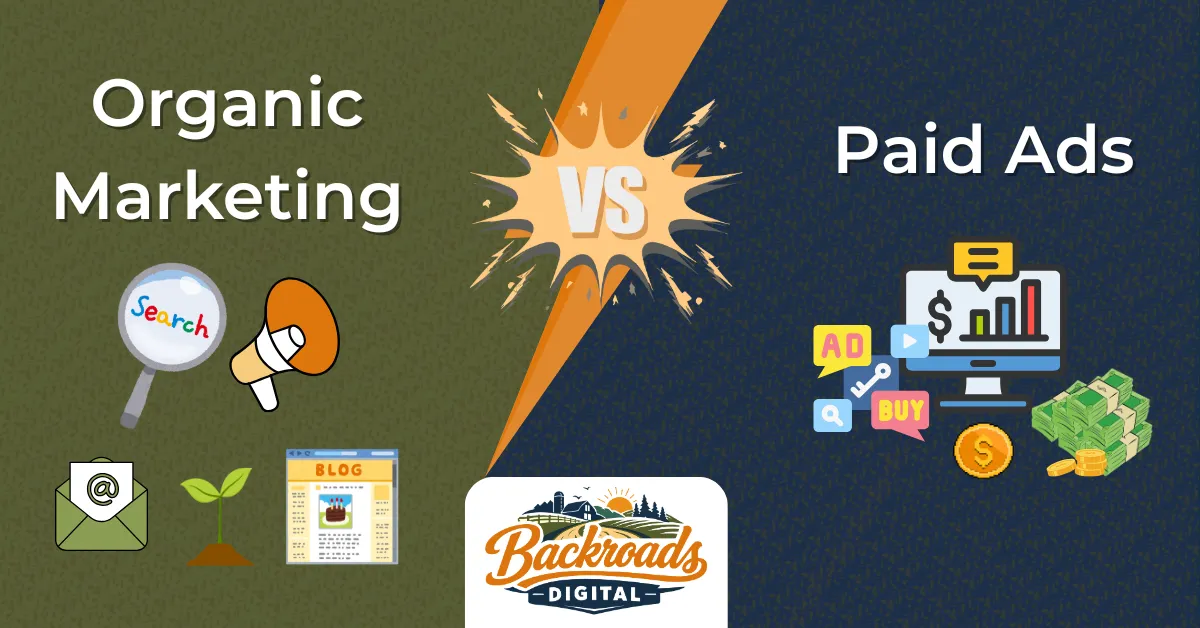
Organic Marketing vs. Paid Ads: What’s the Difference?
By Trevor Williams3 min read
What Is Organic Marketing?
Organic marketing is everything you do to attract customers without paying for each click, view, or impression. It focuses on building visibility and trust over time. Common examples of organic marketing include:
- Website content (blogs, service pages)
- Search engine optimization (SEO)
- Social media posts
- Email newsletters
- Google Business Profile updates
- Consistent branding and messaging
Organic marketing works by earning attention, not buying it.
How Organic Marketing Works
Organic marketing is about showing up consistently where your customers already are. For example:
- Someone searches Google and finds your blog
- A customer follows you on Facebook and keeps seeing your posts
- An email newsletter reminds someone you exist
- A well-built website builds confidence before someone calls
Each interaction may be small, but over time, they stack. Organic marketing builds:
- Trust
- Familiarity
- Authority
- Long-term visibility
It’s not fast, but it’s durable.
Let us help you with Organic Marketing
What Are Paid Ads?
Paid ads are exactly what they sound like: you pay to put your business in front of people immediately. Examples include:
- Google Ads
- Facebook and Instagram ads
- YouTube ads
- Display ads
- Sponsored posts
With paid ads, you’re essentially renting attention. Once the budget stops, the traffic usually stops too.
How Paid Ads Work
Paid advertising is designed for speed. You can:
- Launch a campaign
- Target specific locations or demographics
- Appear at the top of search results
- Drive traffic quickly
Paid ads are great for:
- Promotions
- New offers
- Time-sensitive campaigns
- Testing messaging
- Immediate visibility
But they require:
- Ongoing budget
- Monitoring
- Optimization
- Clear goals
Without those, ad spend can disappear quickly with little return.
The Biggest Difference: Time vs. Momentum
Here’s the simplest way to think about it:
- Organic marketing is like building equity
- Paid ads are like renting space
Organic marketing:
- Takes longer to work
- Builds momentum over time
- Continues paying off even when you slow down
Paid ads:
- Work quickly
- Stop when spending stops
- Require constant management
Neither is “better” on its own. It depends on your goals.
Why Small Businesses Often Struggle With Paid Ads First
Many small businesses jump straight into paid ads because they want fast results. The problem? Paid ads work best after you have:
- A clear message
- A strong website
- Trust-building content
- A defined audience
Without those, ads may get clicks, but not customers. Organic marketing lays the groundwork that makes paid ads more effective later.
Why Organic Marketing Is Often the Smarter Starting Point
For many small businesses, organic marketing is the foundation. It helps:
- Clarify your message
- Build credibility
- Improve your website
- Warm up your audience
- Reduce reliance on ads
When people see your ads after they’ve already seen your content, visited your site, or followed you on social media, conversion rates improve.
The Best Strategy Is Usually Both (In the Right Order)
Organic marketing and paid ads work best together, not in competition. A healthy strategy often looks like this:
- Build a strong website
- Create consistent organic content
- Improve visibility through SEO and social media
- Use paid ads to amplify what’s already working
Organic builds trust. Paid ads increase reach.
Final Thoughts
Organic marketing and paid ads aren’t rivals. They’re tools. The key is knowing:
- What each one does
- When to use them
- How they support each other
For small businesses, long-term growth usually comes from consistency first, then amplification, not the other way around.
Not sure which approach makes sense for your business?
That’s a common question, and a good one. When you’re ready, we’re happy to help you decide where to focus.
Want help with this?
Social media ad campaigns set up, targeted to the right audience in your area, and adjusted every week.$500 to $1,500 a month, plus ad spend