

Why Email Marketing Is Still One of the Best ROI Channels
By Trevor Williams6 min read
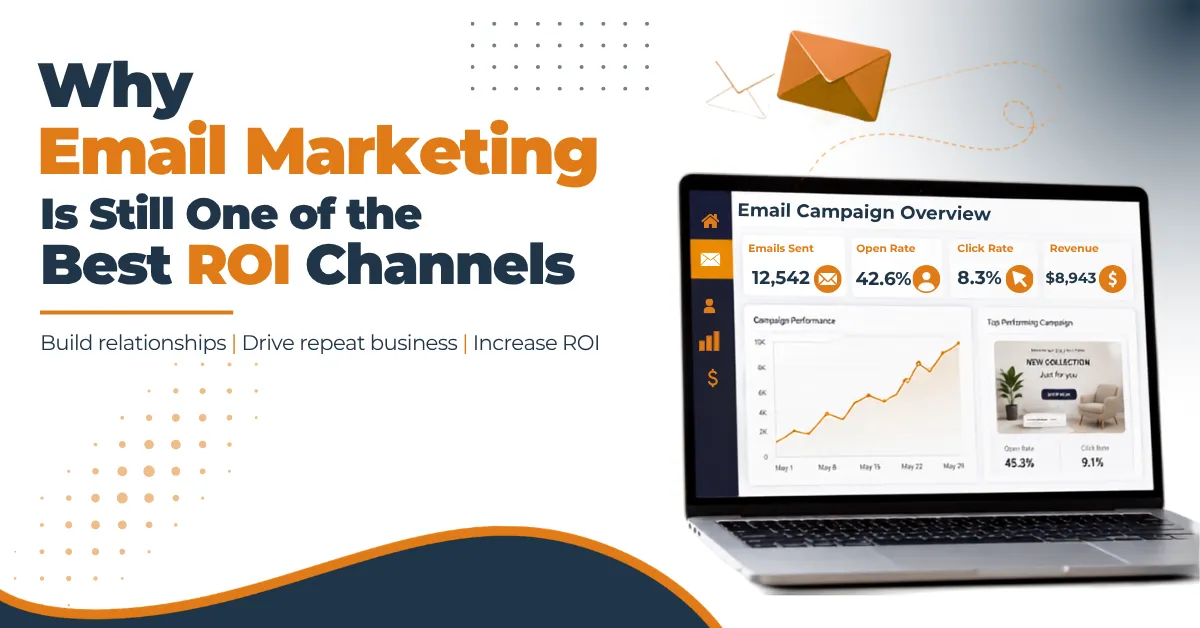
Social media, paid ads, SEO, and new AI-powered marketing tools get plenty of attention, but one of the most effective digital marketing channels has been around for decades: email marketing.
Email may not feel as new or exciting as the latest social platform, but that is exactly why businesses shouldn’t overlook it. Email gives you a direct connection to people who have already shown an interest in your business, and it can help turn that interest into repeat visits, purchases, appointments, and long-term customer relationships.
More importantly, email marketing continues to offer one of the strongest returns on investment in digital marketing. Litmus reports that email generates an average return of about $36 for every $1 spent, while HubSpot’s 2026 email marketing research places typical returns between roughly 10:1 and 36:1 depending on the business and strategy.
Why Does Email Marketing Have Such a High ROI?
One of email marketing’s biggest advantages is cost.
With paid advertising, you generally have to continue spending money to continue reaching people. Social media can reach customers organically, but businesses have limited control over how many followers actually see each post.
Email works differently. Once someone joins your email list, you have an opportunity to communicate with that person directly without paying an advertising platform every time you want to reach them.
That makes a healthy email list a valuable owned marketing asset.
You can use it to announce a new service, promote a special, share a blog post, remind customers about an upcoming event, introduce a new product, or simply keep your business top-of-mind.
Email Helps You Reach People Who Already Know Your Business
One of the hardest parts of marketing is getting someone’s attention for the first time.
Email marketing helps reduce that problem because subscribers have typically already interacted with your business. They may have purchased something, visited your website, requested information, entered a promotion, or voluntarily signed up for updates.
That makes email especially effective for customer retention and repeat business.
Instead of constantly focusing all of your marketing budget on finding new customers, email allows you to continue building relationships with the customers and prospects you already have.
For a local restaurant, that might mean emailing customers about this week’s special. For a service business, it could mean sending seasonal reminders. A retailer could announce new inventory, while a professional service provider might send helpful advice that keeps the business top-of-mind until the customer needs its services again.
You Don’t Have to Depend Completely on Social Media
Social media is an important part of a strong digital marketing strategy, but businesses shouldn’t rely on it alone.
Your Facebook followers belong to Facebook’s platform. Your Instagram followers belong to Instagram’s platform. Algorithms determine which posts appear in someone’s feed, platforms can change their rules, and organic reach can fluctuate.
Your email list gives you another way to stay connected.
That doesn’t mean businesses should choose between email marketing and social media marketing. The strongest strategy is often to use them together.
Social media can introduce new people to your business and build awareness. Your website can provide additional information and capture leads. Email can then help nurture those relationships and encourage people to return.
Each channel supports the others.
Email Marketing Can Be Personalized
Not every customer needs to receive the exact same message.
Modern email marketing platforms allow businesses to organize subscribers based on interests, past purchases, location, activity, and other useful information. This makes it possible to send more relevant messages instead of sending every promotion to everyone.
For example, a business could send:
- A welcome email to new subscribers
- A special offer to previous customers
- A reminder to customers who haven’t visited recently
- An email about a specific service to people who expressed interest in it
- A birthday or anniversary promotion
- Follow-up messages after a purchase or appointment
Personalization and segmentation are particularly valuable because the more relevant an email is to the recipient, the more likely that person is to pay attention and take action. HubSpot reports that segmentation and personalization continue to be important drivers of email performance.
Email Marketing Can Work Even When You’re Not Working
Another major advantage of email marketing is automation.
Businesses don’t necessarily have to manually send every message. Automated email campaigns can be triggered when someone takes a particular action.
A customer might sign up for your email list and automatically receive a welcome message. A new lead could receive a series of helpful emails over the next several weeks. An online customer might receive a reminder after leaving something in their cart.
Once these systems are built, they can continue nurturing customers with relatively little ongoing work.
For a small business owner who already has a long list of responsibilities, that can make email marketing much more manageable.
Email Is Measurable
Email marketing also provides businesses with useful information about what is working. Depending on the email platform and tracking setup, businesses can monitor metrics such as:
- Delivery rate
- Open rate
- Click-through rate
- Website traffic
- Conversions
- Purchases or leads
- Unsubscribes
- Revenue generated
Those numbers help you improve future campaigns.
If one subject line gets significantly more engagement than another, you learn something about your audience. If customers consistently click on one type of content, you can create more of it. If certain promotions generate sales, you can build future campaigns around what worked.
Over time, email marketing becomes less about guessing and more about making decisions based on customer behavior.
The Best Email Marketing Isn’t Constantly Selling
One mistake businesses make with email is treating every message like an advertisement.
If every email says BUY NOW, BOOK TODAY, or DON’T MISS THIS SALE, subscribers eventually start tuning them out.
Effective email marketing provides a reason to stay subscribed.
That could include useful tips, business updates, educational content, local information, new blog posts, behind-the-scenes content, customer stories, special offers, or exclusive announcements.
The goal is to create enough value that when you do send a promotional email, your audience is already familiar with your business and more willing to listen.
Is Email Marketing Worth It for a Small Business?
**Yes. Email marketing can be especially valuable for small businesses because it provides a relatively low-cost way to communicate directly with customers and prospects. ** You also don’t need a list containing tens of thousands of subscribers.
A smaller list of local customers who actually want to hear from your business can be far more valuable than a huge list of people who aren’t interested.
The goal isn’t simply to collect as many email addresses as possible. The goal is to build an audience of people who know your business, trust your business, and may buy from you again.
Email Works Best as Part of a Complete Digital Marketing Strategy
Email marketing shouldn’t replace your website, social media, SEO, or advertising.
It should connect them.
A potential customer might discover your business through a Facebook post, visit your website, subscribe to your email list, read one of your emails several weeks later, and eventually contact you when they need what you offer.
Marketing doesn’t always produce an immediate sale. Often, the businesses that win are simply the ones that stay visible long enough to be remembered when the customer is finally ready.
Email is one of the best tools for doing exactly that.
Build a Marketing System That Keeps Customers Coming Back
Growing a business isn’t only about finding more people. It’s also about staying connected to the people who already know you.
A strong email marketing strategy helps your business remain visible, build trust, promote your products or services, and encourage repeat business without depending entirely on social media algorithms or paid advertising. ** Backroads Digital can help you turn email, social media, your website, and your content into a connected digital marketing strategy designed to keep your business in front of the right people.**
Ready to build a marketing system that keeps customers coming back? Contact Backroads Digital today.
Frequently asked questions
What is email marketing?
Email marketing is a digital marketing strategy that uses email to communicate with customers and prospects. Businesses can use email to share promotions, educational content, announcements, reminders, product information, and other updates.
Does email marketing still work?
Yes. Email remains one of the highest-ROI digital marketing channels, particularly because businesses can communicate directly with an audience they have already built without paying for every individual impression or click.
What is the ROI of email marketing?
Results vary significantly by business, industry, audience, and strategy. Litmus reports an average return of approximately **$36 for every $1 spent on email marketing**.
How often should a small business send marketing emails?
There is no perfect frequency for every business. Many small businesses can start with one or two useful emails per month and increase frequency when they have relevant information, promotions, or content to share. Consistency and relevance are more important than sending emails simply to meet a schedule.
Is email marketing better than social media?
Neither channel needs to replace the other. Social media is excellent for visibility, discovery, engagement, and reaching new audiences, while email is particularly useful for developing relationships with people who have already shown interest in a business. Using **[email](/services/email-marketing/) and [social media together](/services/social-media-management/)** can create a much stronger marketing system. [Email Marketing Services](/services/email-marketing/) [Social Media Management](/services/social-media-management/) [Contact Us](/contact/)
Want help with this?
Newsletters and campaigns planned, written, designed and scheduled, plus platform setup if you need it.$500 to $1,500 a month. Setup $300 to $750