

What Kind of Content Should Local Businesses Be Posting?
By Trevor Williams10 min read
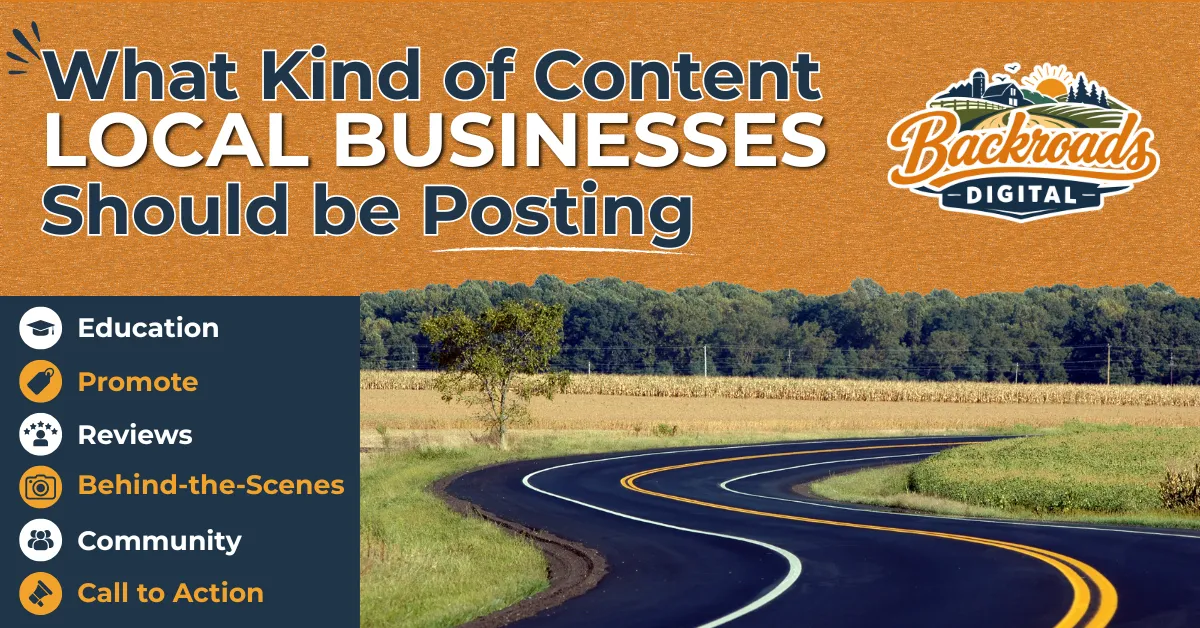
Local businesses should post content that helps customers know, like, trust, and remember them. The best social media content for local businesses includes helpful tips, behind-the-scenes updates, customer-focused posts, promotions, community involvement, employee highlights, product or service education, and clear calls to action.
The goal is not just to “post something.” The goal is to stay visible, build trust, and remind people why they should choose your business when they need what you offer.
Many small business owners know they should be posting, but they get stuck on one big question:
“What am I supposed to post?”
The good news is that your content does not have to be complicated. In fact, the best content for local businesses is often simple, consistent, and focused on real people in your community.
Why Local Businesses Need More Than Random Posts
Posting randomly might keep your page from looking completely inactive, but it usually will not create real momentum. A strong social media presence needs a mix of content that serves different purposes.
Some posts should build trust. Some posts should educate. Some posts should promote your services. Some posts should show personality. Some posts should remind people that your business is active and ready to serve them.
When someone visits your Facebook page, Instagram profile, or Google Business Profile, they are often trying to answer a few quick questions: Are you still open? Do you seem trustworthy? What do you offer? Are other people using your business? Do you look professional? Would I feel comfortable calling, messaging, or visiting?
Your content helps answer those questions before a customer ever contacts you.
1. Educational Content
Educational content helps your audience understand your products, services, process, or industry. This type of content is especially helpful because it positions your business as knowledgeable and trustworthy.
For example, a roofing company could post about signs of storm damage. A restaurant could explain what makes a certain dish popular. A plumbing company could share tips on preventing frozen pipes. A boutique could post about how to style seasonal outfits.
Educational content does not have to be long. It simply needs to answer questions your customers already have.
Examples of Educational Posts:
- “3 Signs It Might Be Time to Call a Professional”
- “What to Know Before Choosing a Service Provider”
- “How to Prepare for Your Appointment”
- “Common Mistakes Customers Make Before Calling Us”
- “What Makes Our Process Different”
This type of content works because it gives people value before asking them to buy.
2. Behind-the-Scenes Content
Behind-the-scenes content helps people feel connected to your business. Local customers often want to support real people, not just faceless companies. Show your team at work. Share photos of your setup process. Highlight how products are made, how services are completed, or what a normal day looks like inside your business.
Behind-the-scenes content is powerful because it builds familiarity. When people feel like they know your business, they are more likely to trust you.
Examples of Behind-the-Scenes Posts:
- A look at your team preparing for the day
- A short video of a project in progress
- Photos from inside the kitchen, shop, office, or job site
- A post showing how much work goes into your service
- A “day in the life” style post
People enjoy seeing what happens behind the counter, behind the desk, or behind the finished product.
3. Customer-Focused Content
Your social media should not only talk about your business. It should also show how your business helps your customers.
Customer-focused content can include testimonials, reviews, customer stories, frequently asked questions, before-and-after examples, or posts that speak directly to customer pain points.
This type of content helps potential customers see themselves in your posts.
Examples of Customer-Focused Posts:
- “Tired of dealing with this problem? Here’s how we can help.”
- “Thank you to our customers for trusting us this week.”
- “Here’s what one customer had to say.”
- “Before and after: a recent project we completed.”
- “A common question we get is…”
When possible, let your customers’ experiences help tell the story of your business.
4. Promotional Content
Promotional content is important, but it should not be the only thing you post.
Your audience does need to know what you sell, what services you offer, what specials are available, and how they can take the next step. However, if every post is a sales pitch, people may start tuning it out.
The key is to mix promotions into a larger content strategy.
Examples of Promotional Posts:
- Weekly specials
- Limited-time offers
- New products or services
- Seasonal promotions
- Appointment availability
- Event announcements
- “Call today” or “Message us to book” posts
Promotional posts should be clear, direct, and easy to act on. Do not make people guess what you want them to do next.
5. Community Content
Local businesses have an advantage that large national brands do not: they are part of the community.
Community content shows that your business is connected to the people and places around you. This can include local events, school support, sponsorships, partnerships, holiday posts, town updates, or simply celebrating your community.
For small-town businesses especially, community content can create strong engagement because people recognize familiar places, names, and events.
Examples of Community Posts:
- Supporting a local school, team, or organization
- Sharing local event reminders
- Celebrating a town milestone or holiday
- Partnering with another local business
- Thanking the community for support
- Posting about local traditions
Community content reminds people that your business is not just located in the area. It is part of the area.
6. Employee and Team Highlights
People connect with people. Highlighting your team helps humanize your business and build trust with your audience.
This kind of content is especially helpful for service-based businesses because customers often want to know who they may be working with before they call.
Examples of Team Highlight Posts:
- Employee introductions
- Work anniversaries
- Staff favorites
- Team accomplishments
- Birthday or milestone posts
- “Meet the team” features
Even a simple photo and a few friendly sentences can make your business feel more approachable.
7. Product or Service Spotlights
Many customers may not know everything your business offers. Product and service spotlight posts help educate your audience while also promoting what you do.
Instead of only saying, “We offer this service,” explain why it matters, who it helps, and when someone might need it.
Examples of Product or Service Spotlights:
- “Service Spotlight: Here’s how this helps our customers.”
- “Did you know we also offer…?”
- “This is one of our most popular menu items.”
- “Here’s why customers choose this package.”
- “Not sure which option is right for you? Here’s a quick breakdown.”
These posts are great for helping customers understand the value of what you provide.
8. Frequently Asked Questions
FAQ content is one of the easiest and most effective types of content local businesses can post.
Think about the questions customers ask over the phone, through messages, in person, or in comments. Each of those questions can become a social media post.
FAQ content is also great for search visibility because people often search online using the same questions they ask in real life.
Examples of FAQ Posts:
- “Do I need an appointment?”
- “What areas do you serve?”
- “Do you offer takeout?”
- “How long does the process take?”
- “What should I bring with me?”
- “How do I know if I need this service?”
Answering common questions publicly can save time, reduce confusion, and help customers feel more confident.
9. Before-and-After Content
Before-and-after content is especially powerful for businesses that provide visible results. This includes contractors, roofers, cleaners, landscapers, salons, designers, detailers, remodelers, and many other service providers.
People love seeing transformation. It gives proof that your business can deliver results.
Tips for Before-and-After Posts: Use clear photos. Explain what changed. Keep the caption simple. Get permission when needed. Include a call to action.
A strong before-and-after post does not just show the finished result. It helps people understand the value of the work.
10. Trust-Building Content
Trust-building content helps reduce hesitation. This is especially important for local businesses because customers often compare multiple options before deciding who to call.
You can build trust by showing experience, consistency, reviews, safety practices, guarantees, processes, certifications, or simply by communicating clearly and professionally.
Examples of Trust-Building Posts:
- Customer reviews
- Years of experience
- Licensed or insured information
- Process explanations
- Project photos
- Common problem-solving posts
- “Here’s what to expect when you work with us”
Trust-building content helps people feel safer choosing your business.
11. Entertaining or Personality-Based Content
Not every post has to be serious. In fact, personality can be one of the best ways for a local business to stand out.
Funny posts, relatable posts, lighthearted captions, memes, team moments, or posts that reflect your brand voice can help increase engagement.
This works especially well for restaurants, retail stores, entertainment venues, and community-based brands. However, almost any business can benefit from showing a little personality when it fits the brand.
Examples of Personality-Based Posts:
- Funny customer situations
- Lighthearted reminders
- Relatable small business moments
- Seasonal humor
- Brand-specific jokes
- “Only locals understand” posts
The key is to keep it appropriate, clear, and connected to your business.
12. Clear Call-to-Action Posts
Every local business should regularly post content that tells people what to do next.
A call to action does not have to be pushy. It simply gives your audience a clear next step.
Examples of Calls to Action:
- Call us today
- Message us to schedule
- Stop by this week
- Order online
- Visit our website
- Book your appointment
- Follow us for updates
- Share this with a friend
- Comment below
- Save this post for later
Without a clear call to action, people may like your post and move on. With a clear call to action, they know how to take the next step.
How Often Should Local Businesses Post?
Most local businesses should aim to post at least 2 to 3 times per week on their main social media platforms. Some businesses may benefit from posting more often, especially restaurants, retail stores, event-based businesses, and companies with frequent specials or updates.
The most important thing is consistency.
Posting five times one week and then disappearing for a month is not as helpful as showing up every week with steady, intentional content.
A Simple Weekly Content Plan for Local Businesses
Here is a simple posting structure many local businesses can use:
Post 1: Helpful or educational content
Answer a common question, explain a service, or give a useful tip.
Post 2: Trust-building or behind-the-scenes content
Show your team, process, recent work, customer feedback, or community involvement.
Post 3: Promotional or call-to-action content
Share a special, invite people to book, promote a service, or remind customers how to contact you.
This simple mix keeps your page active without making every post feel like an advertisement.
The Biggest Mistake Local Businesses Make With Content
The biggest mistake local businesses make is only posting when they need sales.
Social media works best when it is used consistently to build visibility and trust over time. If your business only shows up when you are slow, running a special, or trying to fill the schedule, your audience may not be as engaged.
The better approach is to stay visible before you need the sale.
That way, when someone does need your product or service, your business is already familiar to them.
Final Thoughts: Your Content Should Help People Choose You
The best content for local businesses is not complicated. It should help people understand who you are, what you offer, why they can trust you, and how to take the next step.
You do not need to chase every trend. You do not need to post just to post. You need a clear, consistent content strategy that keeps your business visible in your local community.
When done well, your content can help turn casual followers into real customers.
Need Help Knowing What to Post?
At Backroads Digital, we help local businesses create consistent, strategic social media content that builds trust, improves visibility, and keeps your business in front of the right people.
Whether you need help with social media management, content planning, website updates, or digital marketing strategy, we can help you show up online with a plan.
Ready to stop guessing what to post? Contact Backroads Digital today and let’s build a content strategy for your business.
Frequently asked questions
What should a local business post on Facebook?
A local business should post a mix of educational tips, promotions, behind-the-scenes updates, customer reviews, community involvement, team highlights, and clear calls to action. The goal is to build trust, stay visible, and help customers know what to do next.
What type of content gets the most engagement for small businesses?
The most engaging content for small businesses is often personal, local, helpful, or entertaining. Posts featuring real people, customer stories, local events, before-and-after photos, humor, and helpful tips tend to perform well.
How often should a local business post on social media?
Most local businesses should post at least 2 to 3 times per week. Businesses with frequent specials, events, or product updates may benefit from posting more often.
Should every social media post promote my business?
No. Every post should support your business goals, but not every post should be a direct sales pitch. A strong content strategy includes helpful, engaging, trust-building, community-focused, and promotional content.
Why is consistent posting important for local businesses?
Consistent posting helps your business stay visible, look active, build trust, and remain top-of-mind when customers need your product or service. [Social Media Management Plans](/services/social-media-management/) [Contact us today](/contact/)
Want help with this?
Planned, branded posts with captions and hashtags, scheduled for you, with a monthly report on how they did.From $750 a month