
|
Social media, paid ads, SEO, and new AI-powered marketing tools get plenty of attention, but one of the most effective digital marketing channels has been around for decades: email marketing.
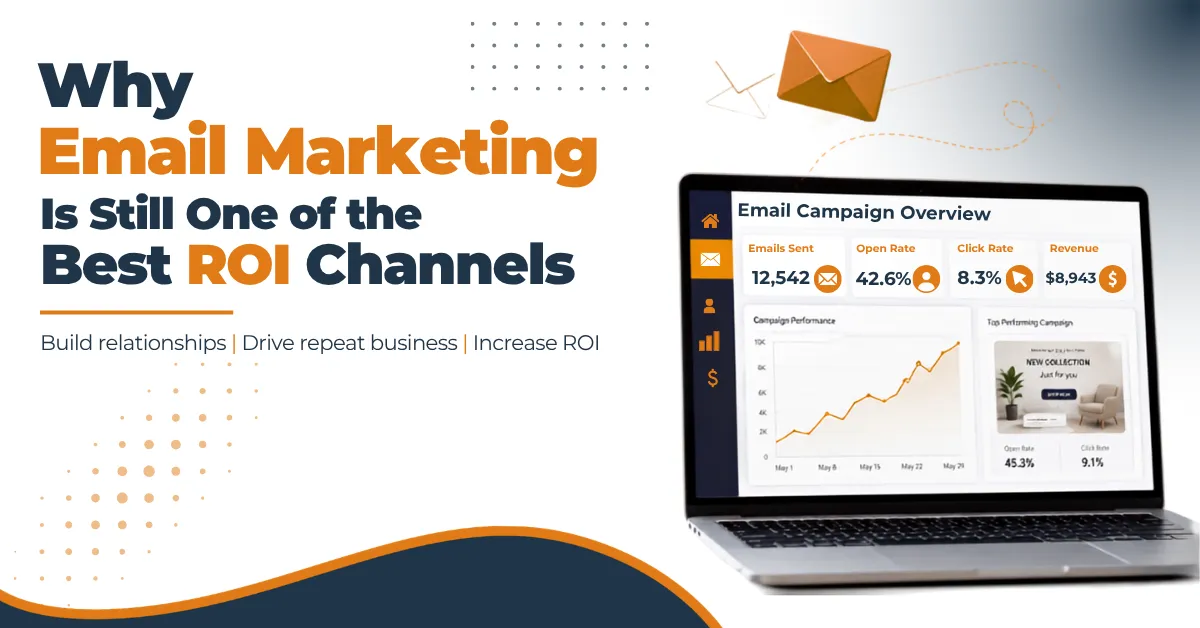
Email may not feel as new or exciting as the latest social platform, but that is exactly why businesses shouldn’t overlook it. Email gives you a direct connection to people who have already shown an interest in your business, and it can help turn that interest into repeat visits, purchases, appointments, and long-term customer relationships. More importantly, email marketing continues to offer one of the strongest returns on investment in digital marketing. Litmus reports that email generates an average return of about $36 for every $1 spent, while HubSpot’s 2026 email marketing research places typical returns between roughly 10:1 and 36:1 depending on the business and strategy. Why Does Email Marketing Have Such a High ROI? One of email marketing’s biggest advantages is cost. With paid advertising, you generally have to continue spending money to continue reaching people. Social media can reach customers organically, but businesses have limited control over how many followers actually see each post. Email works differently. Once someone joins your email list, you have an opportunity to communicate with that person directly without paying an advertising platform every time you want to reach them. That makes a healthy email list a valuable owned marketing asset. You can use it to announce a new service, promote a special, share a blog post, remind customers about an upcoming event, introduce a new product, or simply keep your business top-of-mind. Email Helps You Reach People Who Already Know Your Business One of the hardest parts of marketing is getting someone's attention for the first time. Email marketing helps reduce that problem because subscribers have typically already interacted with your business. They may have purchased something, visited your website, requested information, entered a promotion, or voluntarily signed up for updates. That makes email especially effective for customer retention and repeat business. Instead of constantly focusing all of your marketing budget on finding new customers, email allows you to continue building relationships with the customers and prospects you already have. For a local restaurant, that might mean emailing customers about this week's special. For a service business, it could mean sending seasonal reminders. A retailer could announce new inventory, while a professional service provider might send helpful advice that keeps the business top-of-mind until the customer needs its services again. You Don't Have to Depend Completely on Social Media Social media is an important part of a strong digital marketing strategy, but businesses shouldn't rely on it alone. Your Facebook followers belong to Facebook's platform. Your Instagram followers belong to Instagram's platform. Algorithms determine which posts appear in someone's feed, platforms can change their rules, and organic reach can fluctuate. Your email list gives you another way to stay connected. That doesn't mean businesses should choose between email marketing and social media marketing. The strongest strategy is often to use them together. Social media can introduce new people to your business and build awareness. Your website can provide additional information and capture leads. Email can then help nurture those relationships and encourage people to return. Each channel supports the others. Email Marketing Can Be Personalized Not every customer needs to receive the exact same message. Modern email marketing platforms allow businesses to organize subscribers based on interests, past purchases, location, activity, and other useful information. This makes it possible to send more relevant messages instead of sending every promotion to everyone. For example, a business could send:
Email Marketing Can Work Even When You're Not Working Another major advantage of email marketing is automation. Businesses don't necessarily have to manually send every message. Automated email campaigns can be triggered when someone takes a particular action. A customer might sign up for your email list and automatically receive a welcome message. A new lead could receive a series of helpful emails over the next several weeks. An online customer might receive a reminder after leaving something in their cart. Once these systems are built, they can continue nurturing customers with relatively little ongoing work. For a small business owner who already has a long list of responsibilities, that can make email marketing much more manageable. Email Is Measurable Email marketing also provides businesses with useful information about what is working. Depending on the email platform and tracking setup, businesses can monitor metrics such as:
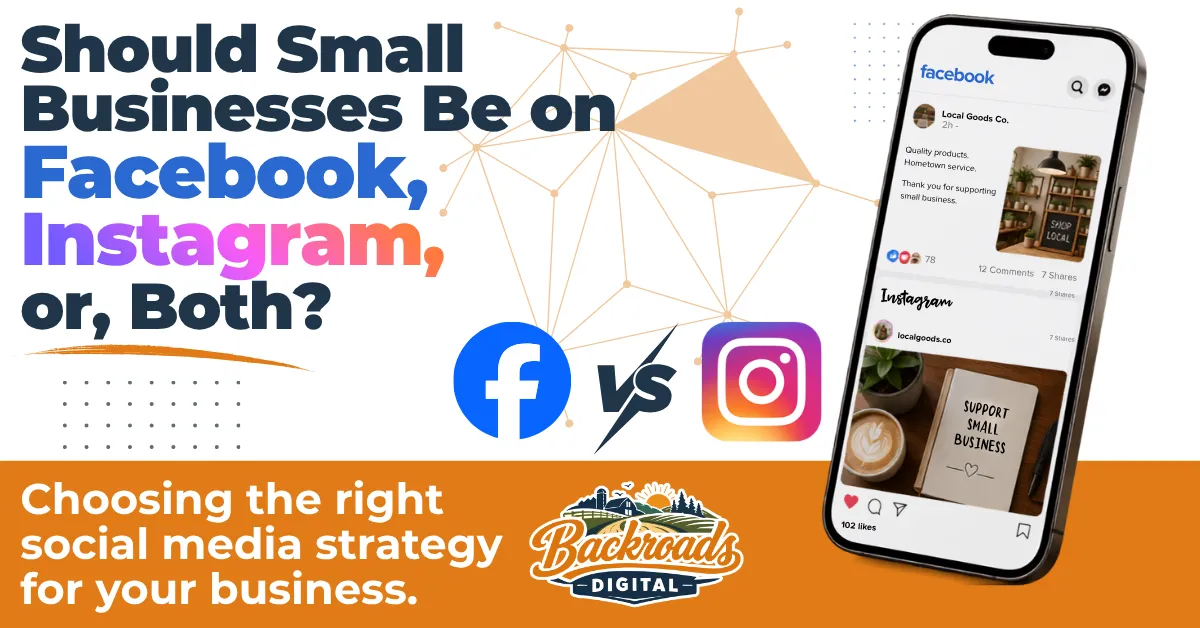
If one subject line gets significantly more engagement than another, you learn something about your audience. If customers consistently click on one type of content, you can create more of it. If certain promotions generate sales, you can build future campaigns around what worked. Over time, email marketing becomes less about guessing and more about making decisions based on customer behavior. The Best Email Marketing Isn't Constantly Selling One mistake businesses make with email is treating every message like an advertisement. If every email says BUY NOW, BOOK TODAY, or DON'T MISS THIS SALE, subscribers eventually start tuning them out. Effective email marketing provides a reason to stay subscribed. That could include useful tips, business updates, educational content, local information, new blog posts, behind-the-scenes content, customer stories, special offers, or exclusive announcements. The goal is to create enough value that when you do send a promotional email, your audience is already familiar with your business and more willing to listen. Is Email Marketing Worth It for a Small Business? Yes. Email marketing can be especially valuable for small businesses because it provides a relatively low-cost way to communicate directly with customers and prospects. You also don't need a list containing tens of thousands of subscribers. A smaller list of local customers who actually want to hear from your business can be far more valuable than a huge list of people who aren't interested. The goal isn't simply to collect as many email addresses as possible. The goal is to build an audience of people who know your business, trust your business, and may buy from you again. Email Works Best as Part of a Complete Digital Marketing Strategy Email marketing shouldn't replace your website, social media, SEO, or advertising. It should connect them. A potential customer might discover your business through a Facebook post, visit your website, subscribe to your email list, read one of your emails several weeks later, and eventually contact you when they need what you offer. Marketing doesn't always produce an immediate sale. Often, the businesses that win are simply the ones that stay visible long enough to be remembered when the customer is finally ready. Email is one of the best tools for doing exactly that. Build a Marketing System That Keeps Customers Coming Back Growing a business isn't only about finding more people. It's also about staying connected to the people who already know you. A strong email marketing strategy helps your business remain visible, build trust, promote your products or services, and encourage repeat business without depending entirely on social media algorithms or paid advertising. Backroads Digital can help you turn email, social media, your website, and your content into a connected digital marketing strategy designed to keep your business in front of the right people. Ready to build a marketing system that keeps customers coming back? Contact Backroads Digital today. Frequently Asked Questions About Email Marketing What is email marketing? Email marketing is a digital marketing strategy that uses email to communicate with customers and prospects. Businesses can use email to share promotions, educational content, announcements, reminders, product information, and other updates. Does email marketing still work? Yes. Email remains one of the highest-ROI digital marketing channels, particularly because businesses can communicate directly with an audience they have already built without paying for every individual impression or click. What is the ROI of email marketing? Results vary significantly by business, industry, audience, and strategy. Litmus reports an average return of approximately $36 for every $1 spent on email marketing. How often should a small business send marketing emails? There is no perfect frequency for every business. Many small businesses can start with one or two useful emails per month and increase frequency when they have relevant information, promotions, or content to share. Consistency and relevance are more important than sending emails simply to meet a schedule. Is email marketing better than social media? Neither channel needs to replace the other. Social media is excellent for visibility, discovery, engagement, and reaching new audiences, while email is particularly useful for developing relationships with people who have already shown interest in a business. Using email and social media together can create a much stronger marketing system. Should Small Businesses Be on Facebook, Instagram, or Both?If you own a small business, you may wonder whether you should focus your social media marketing on Facebook, Instagram, or both. The best answer depends on your customers, your business, and the type of content you plan to share.
For many small businesses, being on both platforms makes sense—but you don't have to treat them exactly the same. Is Facebook Better for Small Businesses? Facebook is still a valuable platform for local small business marketing. It works especially well for businesses that want to share updates, promotions, events, photos, customer reviews, and community-focused content. Facebook can be particularly useful for restaurants, service businesses, retail stores, contractors, and other companies that depend on local customers. Is Instagram Good for Small Businesses? Instagram is highly visual, making it a strong choice for businesses with products, food, projects, services, or other content that photographs well. Photos, Reels, Stories, and behind-the-scenes content can help customers become familiar with your business and build trust before they ever make a purchase or contact you. Should Your Business Use Both? For many businesses, using both Facebook and Instagram is the best strategy. You can often use the same basic content across both platforms while adjusting captions, images, or formatting when needed. More importantly, being active on both gives your business more opportunities to stay visible. Some customers spend most of their time on Facebook, while others prefer Instagram. That doesn't mean you need to be everywhere. It's better to consistently manage one or two platforms well than to create accounts everywhere and rarely update them. Which Social Media Platform Is Right for Your Business? Ask yourself one simple question: Where are your customers? If your customers are primarily on Facebook, focus your attention there. If your business depends heavily on visual content, Instagram may deserve more attention. If your audience uses both, maintaining a presence on both platforms can give you the greatest reach. At Backroads Digital, we help small businesses build practical social media strategies without making marketing more complicated than it needs to be. Need help managing your Facebook and Instagram pages? Contact Backroads Digital to learn how our social media management services can help your business stay visible, consistent, and connected with customers. Frequently Asked Question Do small businesses need both Facebook and Instagram? Not necessarily. Small businesses should focus on the platforms their customers actually use. However, many businesses benefit from having an active presence on both Facebook and Instagram because it increases visibility and allows them to reach different parts of their audience. For most local businesses, the goal of social media isn't to go viral. It's to be remembered.
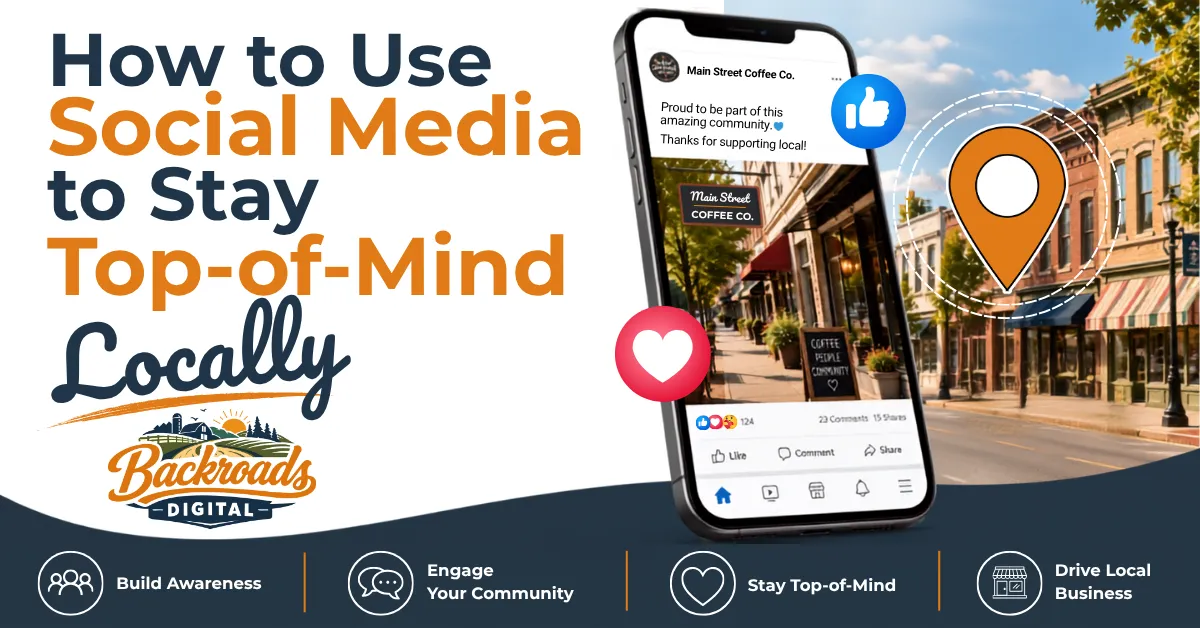
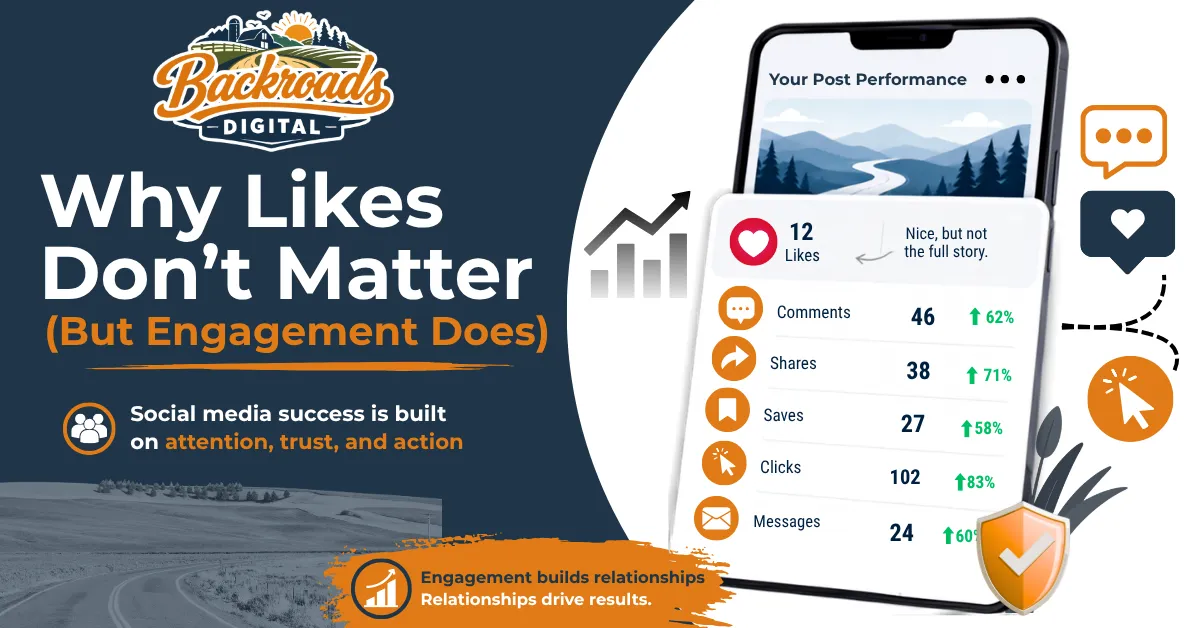
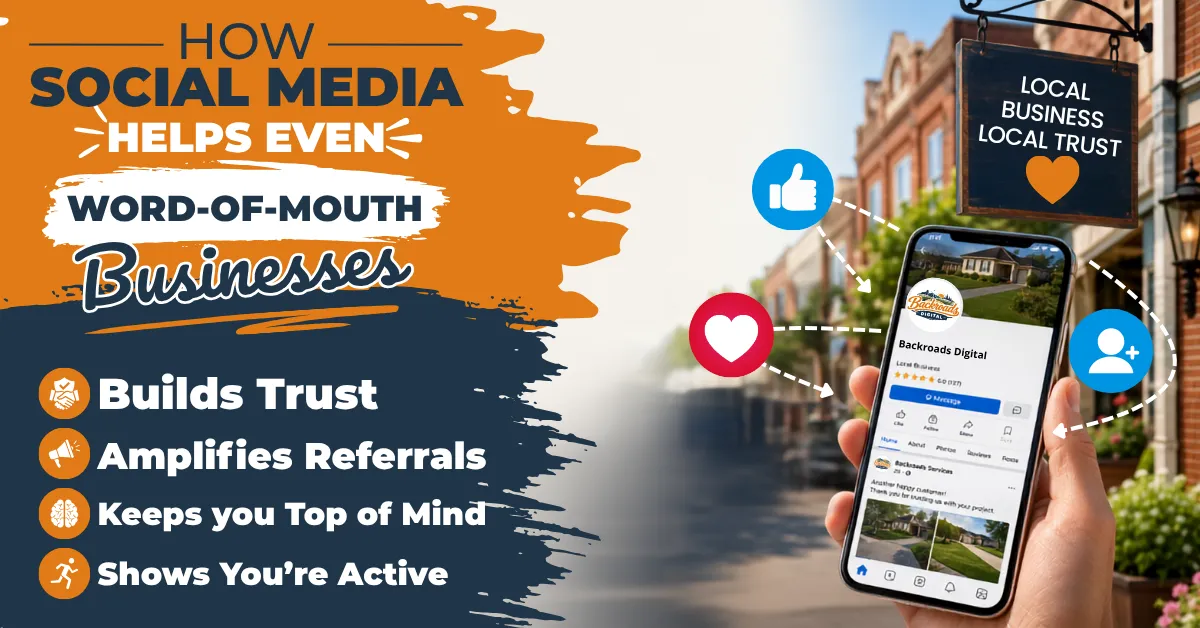
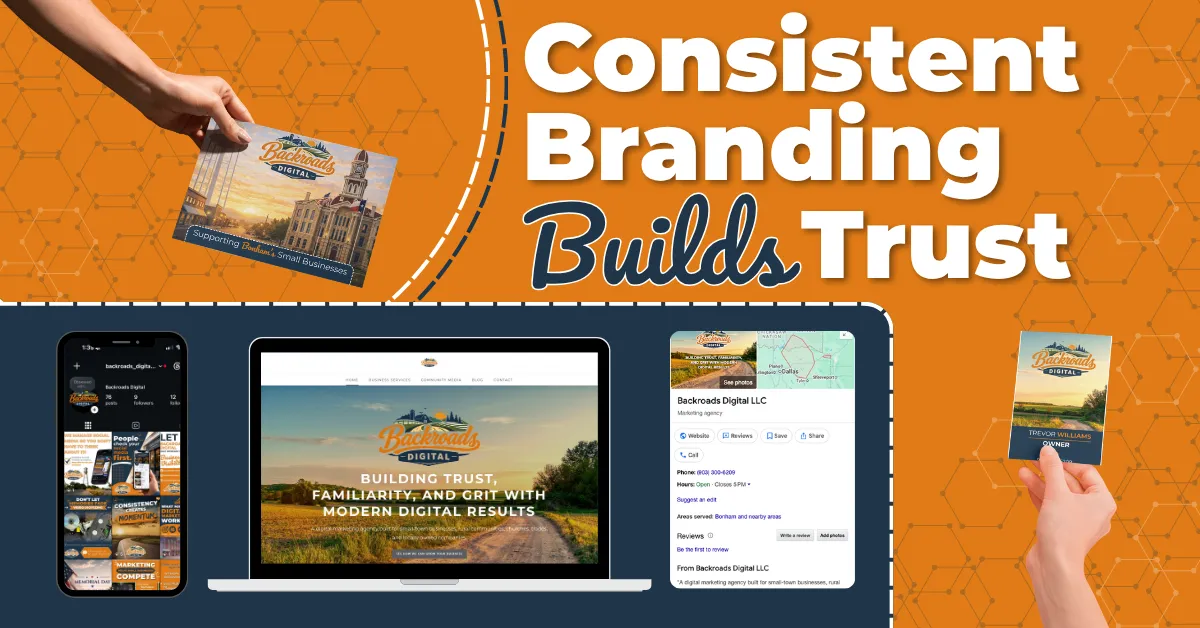
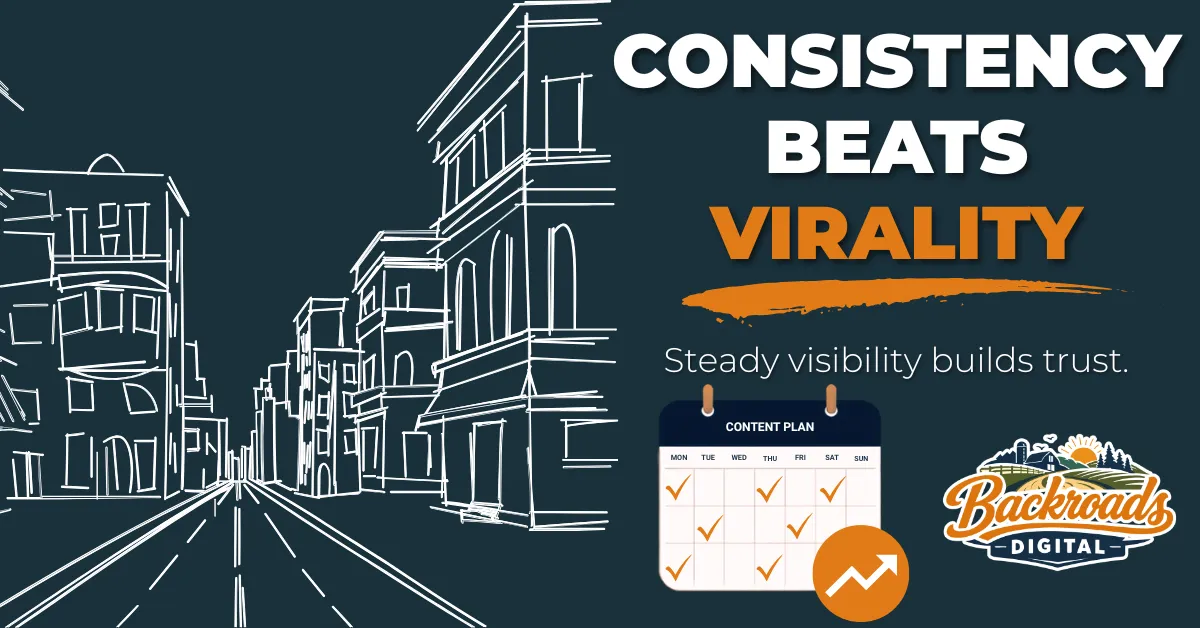
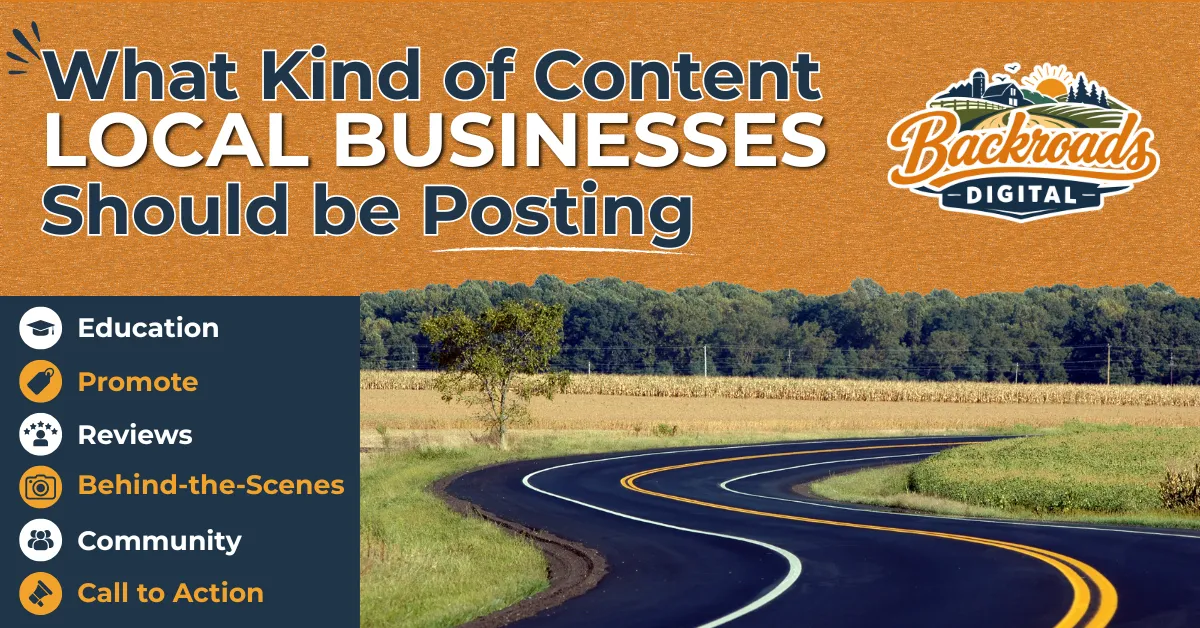
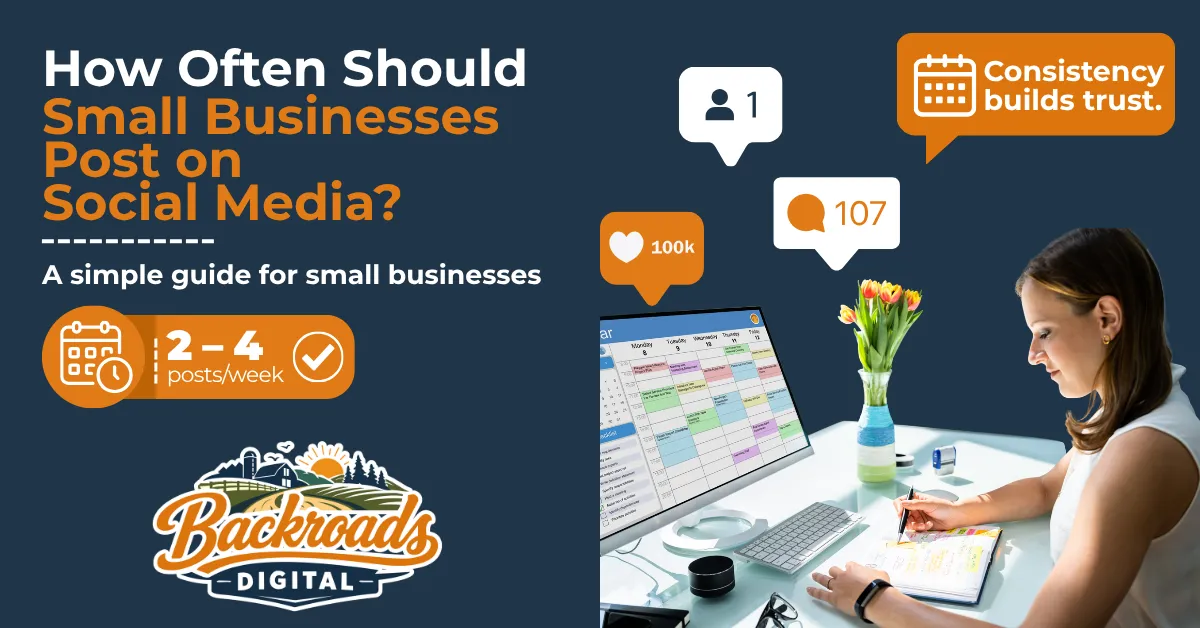
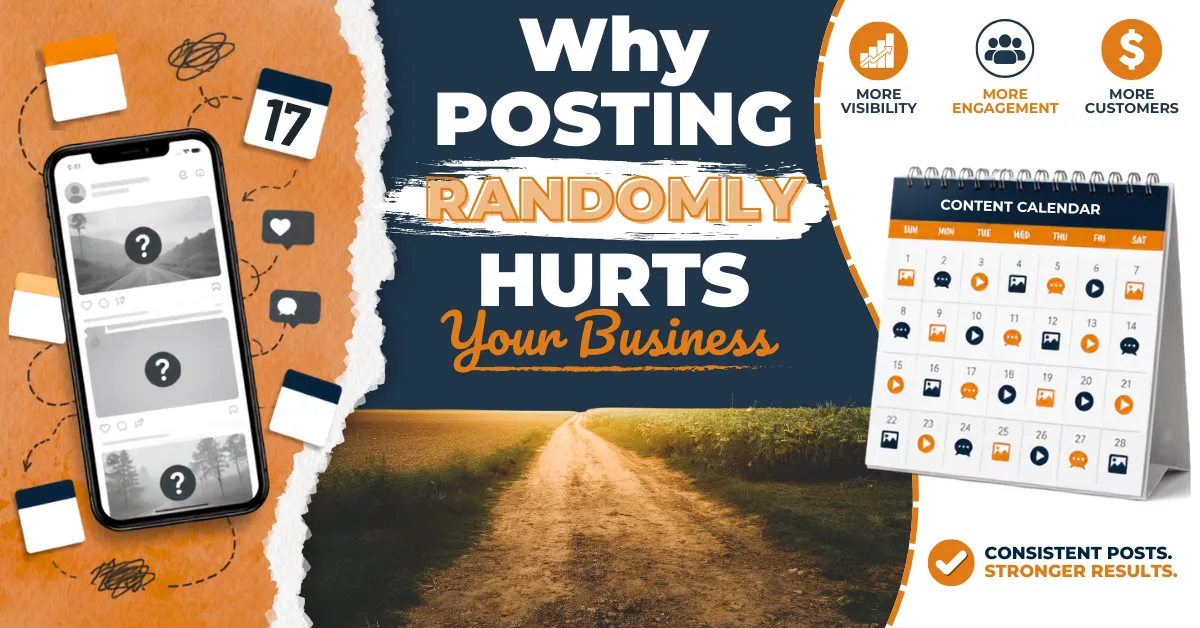
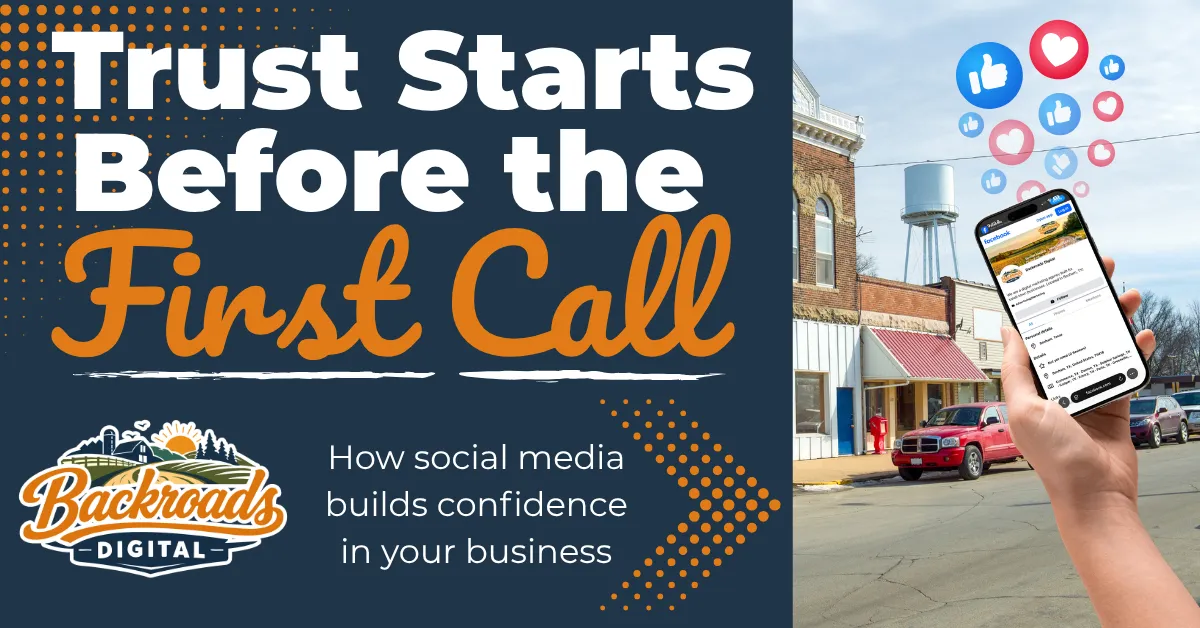
When someone in your community suddenly needs a plumber, restaurant, contractor, insurance agent, photographer, or other local service, you want your business to be one of the first names that comes to mind. Social media gives small businesses an opportunity to build that familiarity long before a customer is ready to make a purchase. The key is consistency. When people regularly see your business in their Facebook or Instagram feeds, they become more familiar with your name, your services, and what makes your business different. Over time, that familiarity can turn into trust—and trust can turn into customers. What Does It Mean to Stay Top-of-Mind? Staying top-of-mind means making your business familiar enough that customers remember you when they need what you offer. Most people aren't actively searching for your product or service every day. Someone may follow a local roofing company for months before they actually need a new roof. They may see posts from a restaurant several times before deciding where to eat on Friday night. Those repeated interactions matter. A customer might not like, comment on, or share every post they see, but they are still becoming familiar with your business. That's why social media marketing should be viewed as more than a collection of individual posts. Each post is another opportunity to remind potential customers that your business is there when they need you. 1. Post Consistently Consistency is one of the most important parts of an effective local social media strategy. Posting several times one week and then disappearing for a month makes it difficult to build recognition. Instead, develop a posting schedule that keeps your business visible without overwhelming your audience. For many small businesses, a few quality posts each week can be more effective than trying to post every day. The exact number will depend on your business, audience, and available content. What matters most is creating a schedule you can maintain. Consistent posting tells customers that your business is active, available, and engaged in the community. 2. Give People a Reason to Remember You If every post says "Buy from us," people will quickly learn to scroll past. Effective social media content gives customers a reason to pay attention. Your posts can answer questions, provide useful information, entertain your audience, introduce your employees, highlight your work, or show what is happening behind the scenes. A local restaurant might feature its weekly special. A contractor could share a recently completed project. A service business could answer a common customer question. A retail store might highlight a new product or seasonal item. The goal is to create content that continually reminds people what your business does and why they should choose you. 3. Make Your Content Feel Local One of the biggest advantages small businesses have on social media is something national companies often struggle to replicate: a genuine connection to the community. Use it. Talk about local events, seasons, schools, sports, community organizations, and other things your customers recognize. Celebrate milestones involving your employees or customers. Share photos from your location instead of relying entirely on generic stock images. Local content helps customers see your business as part of their community rather than simply another company trying to sell them something. It can also make your posts more relatable and shareable among the people you actually want to reach. 4. Show the People Behind the Business Customers like doing business with people they know and trust. Social media gives small businesses an opportunity to put faces behind the logo. Introduce employees, celebrate anniversaries, share behind-the-scenes moments, or explain why you started the business. These posts don't need to be complicated. Even a simple photo and a short story can help customers feel more connected to your company. For locally owned businesses especially, those personal connections can become a major competitive advantage. 5. Stay Visually Consistent Being top-of-mind isn't only about how often people see you. It's also about whether they recognize you. Use consistent colors, fonts, logos, photography styles, and messaging throughout your social media presence. Your posts don't all have to look identical, but they should feel like they came from the same business. Over time, people may begin recognizing your content before they even notice your business name. That recognition helps strengthen your brand and makes every future post more effective. 6. Engage With Your Audience Social media works best when businesses actually use it socially. Respond to comments. Answer questions. Thank customers for recommendations. Participate appropriately in conversations involving your community. These small interactions show people that someone is actually paying attention behind the business page. Engagement can also help turn an ordinary follower into someone who feels connected to your business. That relationship makes it much more likely that they will remember you—or recommend you—when the right opportunity comes along. 7. Don't Judge Every Post by Likes One of the biggest mistakes businesses make is assuming a post failed because it didn't receive many likes. Not everyone who sees your content will interact with it. Someone can see your business repeatedly without ever clicking the Like button. Then, three months later, when they need the service you provide, your name is the one they remember. Likes and comments can be useful indicators, but they're only part of the picture. Reach, profile visits, website traffic, messages, phone calls, and ultimately new customers are all important measures of social media success. For local businesses, consistent visibility can often be more valuable than occasional bursts of engagement. 8. Keep Showing Up Before Customers Need You The best time to introduce someone to your business isn't necessarily the moment they're ready to buy. It's before they need you. If customers have already seen your work, learned about your services, read your advice, and become familiar with your business, you've shortened the distance between discovering your company and trusting it. Then, when the need finally arises, they aren't searching for a completely unfamiliar business. They're contacting one they've already seen dozens of times. That's the real power of staying top-of-mind. Social Media Helps Turn Familiarity Into Trust Local marketing has always relied heavily on familiarity. Years ago, that familiarity might have come from seeing the same newspaper ad, billboard, storefront, or business owner around town. Today, social media provides another way to build that same recognition. You don't have to become the biggest account in your industry. You don't need thousands of followers, and you certainly don't need every post to go viral. You need the right people to see your business often enough that they remember you. A consistent social media presence keeps your business visible, builds familiarity, and gives potential customers more opportunities to learn why they should trust you. Need Help Staying Consistent on Social Media? Running a business takes time, and keeping up with Facebook and Instagram can easily fall to the bottom of the list. Backroads Digital helps small businesses stay visible with consistent, professional social media content designed to keep their business in front of the people who matter most. From content planning and graphics to captions and ongoing social media management, we can help you build a stronger online presence without adding another task to your week. Ready to keep your business top-of-mind? Contact Backroads Digital today to learn more about our social media management services. Frequently Asked Questions How does social media help a local business stay top-of-mind? Social media keeps your business visible by regularly placing your name, services, employees, products, and expertise in front of potential customers. Repeated exposure builds familiarity, making customers more likely to remember your business when they need what you offer. How often should a local business post on social media? There isn't one posting schedule that works for every business. For many small businesses, posting a few times each week provides enough consistency to stay visible while still allowing time to create useful, high-quality content. What should local businesses post on social media? Local businesses can share promotions, customer questions, helpful tips, employee introductions, behind-the-scenes content, completed projects, community events, customer reviews, products, services, and other information that helps customers understand and remember the business. Do social media posts need a lot of likes to be effective? No. Engagement is useful, but a person does not have to like or comment on a post for it to influence their awareness of your business. Consistent visibility can build recognition even among people who rarely interact with posts. Is Facebook or Instagram better for local businesses? The best platform depends on where your customers spend their time and what type of content your business produces. Many businesses benefit from using both Facebook and Instagram, while others may see better results by focusing their efforts on one primary platform. Why is consistency important in local social media marketing? Consistency gives customers repeated opportunities to see and remember your business. Over time, repeated exposure can build brand recognition, familiarity, and trust, increasing the chances that customers will think of your business when they're ready to make a purchase. When businesses look at their social media performance, one of the first numbers they tend to notice is how many likes a post received. Likes are easy to see, easy to understand, and can make a post feel successful at a glance. The problem is that likes alone don’t tell you very much about whether your social media is actually helping your business grow. For a small business, a post with 100 likes but no comments, shares, clicks, messages, or customer inquiries may be less valuable than a post with 20 likes that gets people talking, visiting your website, or reaching out for more information. That is why businesses should focus less on collecting likes and more on creating meaningful engagement. What Is Social Media Engagement? Social media engagement is the way people interact with your content beyond simply seeing it in their feed. Engagement can include likes, comments, shares, saves, link clicks, direct messages, profile visits, video views, replies, tags, and mentions. In some cases, it can also include actions that happen away from the platform, such as someone calling your business or visiting your website after seeing a post. Likes are technically a form of engagement, but they are usually one of the easiest actions a person can take. A customer who takes the time to comment, share your post with a friend, save it for later, or send your business a message is showing a much stronger level of interest. Those actions are often a better indicator that your content is connecting with the right audience. Why Likes Don’t Matter as Much as Engagement A like can happen in less than a second. Someone may tap the Like button while scrolling and immediately move on to the next post without giving your business another thought. While that interaction is not meaningless, it does not necessarily show that the person is interested in becoming a customer. Meaningful engagement requires more effort. When someone asks a question in the comments, shares a post with a friend, clicks through to your website, or sends you a direct message, your content has encouraged them to take another step. That is much closer to what social media marketing should accomplish for a business. The goal is not simply to make people acknowledge that your post exists. The goal is to build enough attention, familiarity, and trust that your business comes to mind when someone needs the product or service you provide. Engagement Helps Build Relationships With Potential Customers Most customers do not see one Facebook or Instagram post and immediately decide to make a purchase. More often, they become familiar with a business gradually. They may see a helpful post today, a customer review next week, a behind-the-scenes photo later in the month, and a promotion a few weeks after that. Over time, those repeated interactions help your business become familiar. When that person eventually needs what you offer, your company is no longer a complete stranger. They have seen your name, your employees, your work, your products, or your personality before. That familiarity can be especially important for small and local businesses. In smaller communities, customers often choose businesses they recognize and trust. Social media gives businesses the opportunity to build some of that familiarity before a customer ever walks through the door, makes a phone call, or requests an estimate. Engagement Can Help Increase Social Media Reach Social media platforms are designed to keep people interested and active. When users comment on, share, save, watch, or otherwise interact with content, those actions can help indicate that the content is relevant or interesting. As a result, engaging content may have a better opportunity to reach additional people organically. This does not mean that every local business needs hundreds of comments or thousands of shares on every post. In fact, chasing large numbers can sometimes distract businesses from the audience that matters most. A local company does not necessarily need national attention if almost none of those people could realistically become customers. For example, a contractor serving Bonham and the surrounding North Texas area would usually benefit more from reaching homeowners in those communities than from generating thousands of views across the country. Relevant engagement from the right people is often more valuable than high engagement from an audience that will never buy from you. A Smaller Engaged Audience Can Be Better Than a Large Passive One Follower counts can be misleading for the same reason. Having thousands of followers may look impressive, but those followers do not provide much value if they rarely interact with the business. Imagine one company has 5,000 followers but receives almost no comments, shares, messages, website traffic, or customer inquiries. Another company has 750 followers, but customers regularly comment, tag friends, respond to promotions, and ask questions. The second company may actually have the healthier social media presence because its audience is paying attention. A smaller group of engaged followers who recognize your business and regularly interact with your content can be much more valuable than a large audience that scrolls past everything you post. What Kind of Engagement Should Small Businesses Look For? The most important engagement metrics depend on what you are trying to accomplish. If the goal of a post is to generate leads, link clicks, direct messages, calls, quote requests, and website visits may be among the most important measurements. If your goal is brand awareness, reach, shares, video views, and profile visits may matter more. For businesses focused on community relationships, comments, tags, mentions, and conversations can be especially valuable. A restaurant, for example, may get more value from a customer commenting, “We need to go here Friday,” and tagging a friend than it gets from ten anonymous likes. A roofing company may care far more about one homeowner sending a message asking for an estimate than receiving another 50 reactions. The key is to connect the metric to the purpose of the post. Instead of asking whether a post received enough likes, ask whether the post encouraged the audience to do something meaningful. How Can Small Businesses Get More Engagement? Better engagement usually starts with creating content that gives people a reason to stop scrolling. Businesses that use social media only to advertise products or repeatedly tell people to “buy now” often struggle to create real interaction because there is little reason for the audience to participate. A stronger content strategy mixes promotional posts with useful, entertaining, educational, and community-focused content. Customer stories, employee spotlights, behind-the-scenes photos, helpful tips, frequently asked questions, short videos, local information, testimonials, and occasional promotions can all give your audience more opportunities to connect with your business. Businesses should also remember that social media is meant to be social. When someone leaves a thoughtful comment, respond when appropriate. When a customer compliments your business, thank them. When someone asks a question, answer it. Those small interactions help show that there are real people behind the page and can strengthen the relationship between your business and its audience. Measure What People Do After Seeing Your Content Instead of asking, “How many likes did this post get?” businesses should start asking, “What did people do after they saw it?” Did they comment or share it? Did they visit your profile or website? Did someone send you a message? Did the post start a conversation? Did customers mention seeing it when they visited your business? Those types of actions provide a much clearer picture of whether your social media strategy is accomplishing something useful. Not every post needs to generate a sale immediately. Social media often works over time by keeping your business visible and familiar. The value comes from consistently showing up in front of the right audience and giving those people reasons to remember and trust your business. Social Media Success Is About Attention and Trust Likes can be encouraging, and there is nothing wrong with wanting people to react positively to your content. They just should not be the primary way you decide whether your social media marketing is successful. For most small businesses, the bigger goal is to earn attention, build trust, stay visible, create conversations, and encourage potential customers to take action when they are ready. A post that helps accomplish those things is valuable even if it never receives hundreds of likes. At Backroads Digital, we help small and local businesses create consistent social media strategies designed to do more than simply fill a content calendar. The goal is to help businesses stay visible, connect with their communities, and build stronger relationships with the people most likely to become customers. Because at the end of the day, likes might make a post look successful, but meaningful engagement is what helps make social media useful for your business. Need Help Improving Your Social Media Engagement? If your business is posting regularly but your audience does not seem to be responding, the problem may not be how often you post. Your content strategy may simply need to give people more reasons to interact. Backroads Digital helps small and local businesses build consistent, professional social media presences without having to spend hours managing their pages themselves. If you are ready to improve your social media strategy and create content that connects with your audience, contact Backroads Digital to learn how we can help. Frequently Asked Questions
Are Facebook and Instagram likes important for businesses? Likes can be useful because they show that someone noticed or enjoyed a post, but they should not be the primary measurement of social media success. Comments, shares, saves, website clicks, direct messages, inquiries, and other meaningful actions usually provide a better picture of whether your content is connecting with potential customers. What is considered good social media engagement? Good social media engagement occurs when your audience actively interacts with your content. For a small business, meaningful comments, shares, saves, messages, website visits, inquiries, and customer conversations can often be more valuable than receiving a large number of likes. Why is social media engagement important for local businesses? Engagement helps local businesses build familiarity and trust with potential customers. When people repeatedly see and interact with a business online, they are more likely to recognize and remember that company when they eventually need its products or services. Does social media engagement help increase reach? Engagement can signal to social media platforms that users find a post relevant or interesting. Comments, shares, saves, clicks, and other interactions may therefore help content reach additional users, although reach can also depend on many other factors. How can a small business increase social media engagement? Small businesses can improve engagement by creating useful, entertaining, informative, and locally relevant content instead of relying entirely on advertisements. Photos, videos, customer stories, employee spotlights, questions, testimonials, helpful tips, and community-focused posts can all encourage more interaction. Which is more important: followers or engagement? Both can be useful, but engagement is often a better indicator of the quality of your audience. A smaller group of followers who regularly interact with your business can be more valuable than thousands of followers who rarely pay attention. |
Trevor Williams
Owner - Backroads Digital Archives
August 2026
Categories |
RSS Feed