
Backroads Digital
  • Home
  • About
  • Business Services
    • Social Media Management
    • Social Media Setup
    • Website/SEO
    • Email Marketing
    • Text Message Marketing
    • Frequently Asked Questions (FAQ)
  • Media Digitizing
  • Blog
  • Contact

How Social Media Builds Trust Before Someone Ever Calls You

6/5/2026

 
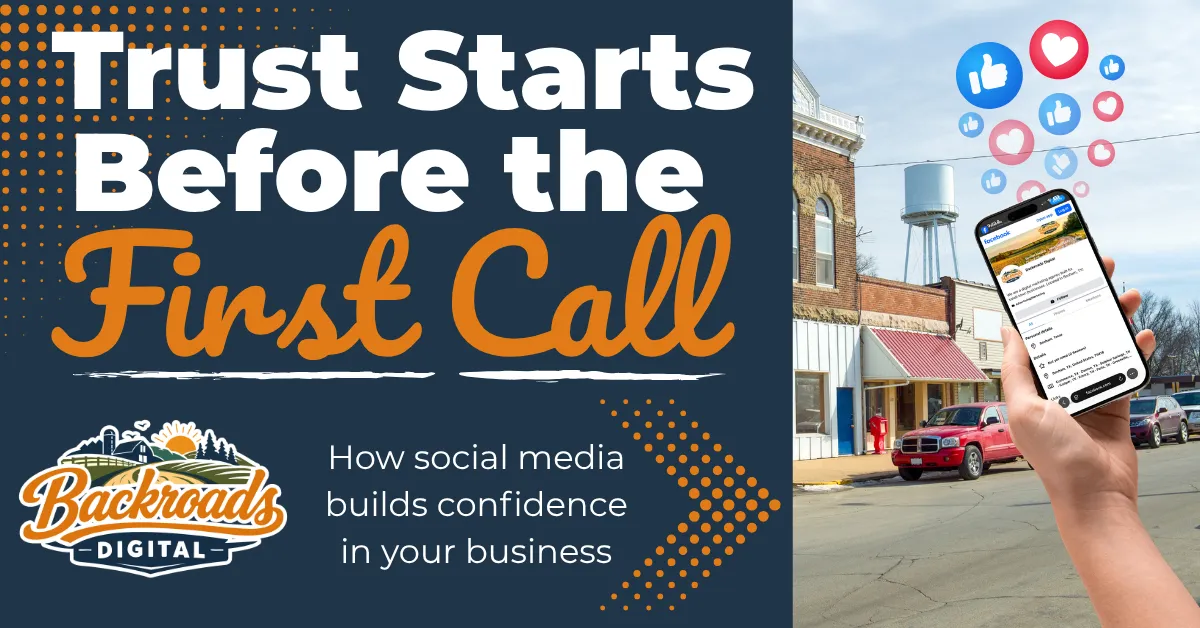
Backroads Digital graphic with the headline “Trust Starts Before the First Call,” showing a small-town street scene, a hand holding a smartphone with a Facebook business page, and floating social media reaction icons to show how social media builds trust before customers contact a business.

The First Impression Often Happens Before the First Call
Before someone calls your business, visits your website, or walks through your door, there’s a good chance they have already looked you up online.

They may have checked your Facebook page, scrolled through your Instagram, read your reviews, or looked to see if your business still seems active. That means your social media is often part of the decision-making process before you ever speak to a potential customer.

For small businesses, social media is not just about posting pretty pictures or chasing likes. It is about building trust before the customer is ready to take the next step.

When someone sees that your business is active, helpful, consistent, and professional online, it gives them more confidence to call you, message you, book with you, or visit your location.

Why Trust Matters in Small Business Marketing
People do business with companies they trust.

That is especially true for local businesses. Whether someone is hiring a roofer, choosing a restaurant, calling a plumber, booking a photographer, or looking for a service provider, trust plays a major role in the decision.

Potential customers are often asking questions like:
“Is this business still open?”
“Do they do good work?”
“Are they professional?”
“Can I trust them with my money?”
“Will they actually respond?”
“Do other people use this business?”


Your social media can help answer those questions before the person ever contacts you.

A strong social media presence gives people a glimpse of who you are, what you offer, how you communicate, and whether your business feels reliable.

Social Media Shows That Your Business Is Active
One of the simplest ways social media builds trust is by showing that your business is active.

When someone visits your Facebook page and sees that your last post was two years ago, it can create doubt. They may wonder if you are still open, still offering the same services, or still paying attention to your online presence.

On the other hand, when they see recent posts, updated information, current photos, and regular activity, it reassures them.

An active social media page tells potential customers:
You are still in business.
You are paying attention.
You are engaged with your audience.
You are easier to contact.
You care about how your business appears online.


You do not have to post every day to build trust. But consistent posting helps your business look alive, present, and dependable.

Consistency Makes Your Business More Familiar
Trust often grows through familiarity.

The more often people see your business online, the more familiar your name becomes. They may not need your service the first time they see your post. They may not need it the second or third time either. But when the need finally comes, your business is more likely to come to mind.

This is one of the biggest benefits of consistent social media marketing.

A potential customer may see your posts for weeks or months before they ever reach out. During that time, your content is slowly building recognition. You are reminding people who you are, what you do, where you are located, and how you can help.

That familiarity matters.

When people feel like they already “know” your business, even a little, they are often more comfortable taking the next step.

Photos and Videos Help People See the Real Business
Social media gives people a visual connection to your business.

Photos and videos help potential customers see your work, your products, your team, your location, your process, and your personality. This makes your business feel more real.

For example:
A restaurant can share food photos, daily specials, behind-the-scenes kitchen moments, and customer favorites.
A contractor can show before-and-after photos, project progress, and finished work.
A service business can explain common problems, answer customer questions, and show examples of completed jobs.
A retail business can showcase new products, seasonal items, and in-store displays.


These types of posts help remove uncertainty.

Instead of asking, “Can this business do what I need?” the customer can see examples for themselves.

Visual proof builds confidence.

Helpful Content Positions You as the Expert
Trust is not only built by showing what you sell. It is also built by helping people understand what they need.

Educational posts, tips, FAQs, and simple explanations can position your business as a helpful expert in your field.

For example, a plumbing company could post about signs of a hidden leak. A roofing company could explain when storm damage should be inspected. A restaurant could highlight catering options or explain how to order for a group. A digital marketing company could explain why consistent posting matters.

Helpful content shows that you know your industry and care about serving people, not just selling to them.

This type of content works well because it answers questions people may already be asking online.

When your business provides useful answers, potential customers are more likely to see you as trustworthy.

Reviews, Comments, and Engagement Add Social Proof
Social proof is one of the most powerful trust-builders online.

When people see others interacting with your business, leaving positive comments, sharing your posts, tagging friends, or writing good reviews, it adds credibility.

It tells potential customers that other people know, like, and use your business.

Social media creates opportunities for this kind of trust to grow. Every positive comment, customer photo, shared post, tagged recommendation, or review can help reinforce the idea that your business is worth contacting.

This is especially important for local businesses because people often trust recommendations from people in their community.

When someone sees their friends, neighbors, or local community members engaging with your business, it can make your business feel like a safer choice.

Your Tone and Personality Matter
People do not only evaluate what you post. They also pay attention to how you communicate.

Your tone matters.

Are your posts helpful? Friendly? Professional? Clear? Consistent? Do they sound like a real business run by real people?

Social media allows your business to develop a voice. That voice can help people understand your personality before they ever call.

Some businesses need a warm and personal tone. Some need a polished and professional tone. Others can use humor, local personality, or a more casual approach.

The key is to match your brand and your audience.

When your tone feels authentic and consistent, it helps people feel more comfortable reaching out.

Social Media Reduces the Risk for the Customer
Every buying decision includes some level of risk.

A customer may wonder if they are choosing the right company, spending their money wisely, or going to receive good service.

Your social media can help reduce that hesitation.

When someone can see your work, read your updates, understand your services, view customer interactions, and get a feel for your business, the decision feels less risky.

That is why social media should not be treated as an afterthought.

It is part of your online reputation.

A strong social media presence gives potential customers more reasons to feel confident before they make contact.

Inactive Social Media Can Create Doubt
Just as good social media can build trust, neglected social media can create doubt.

If your page is outdated, inconsistent, or missing important information, potential customers may move on to a competitor who looks more active online.

This does not mean every business needs perfect content. It means your online presence should clearly show that your business is open, active, and trustworthy.

A few signs that your social media may be hurting trust include:

Outdated business hours
Old promotions still visible
No recent posts
Poor-quality graphics
Inconsistent branding
Unanswered comments or messages
Missing contact information
Confusing service descriptions


These small issues can make a potential customer hesitate.

The good news is that they can be fixed with a clear, consistent social media strategy.

What Should Small Businesses Post to Build Trust?
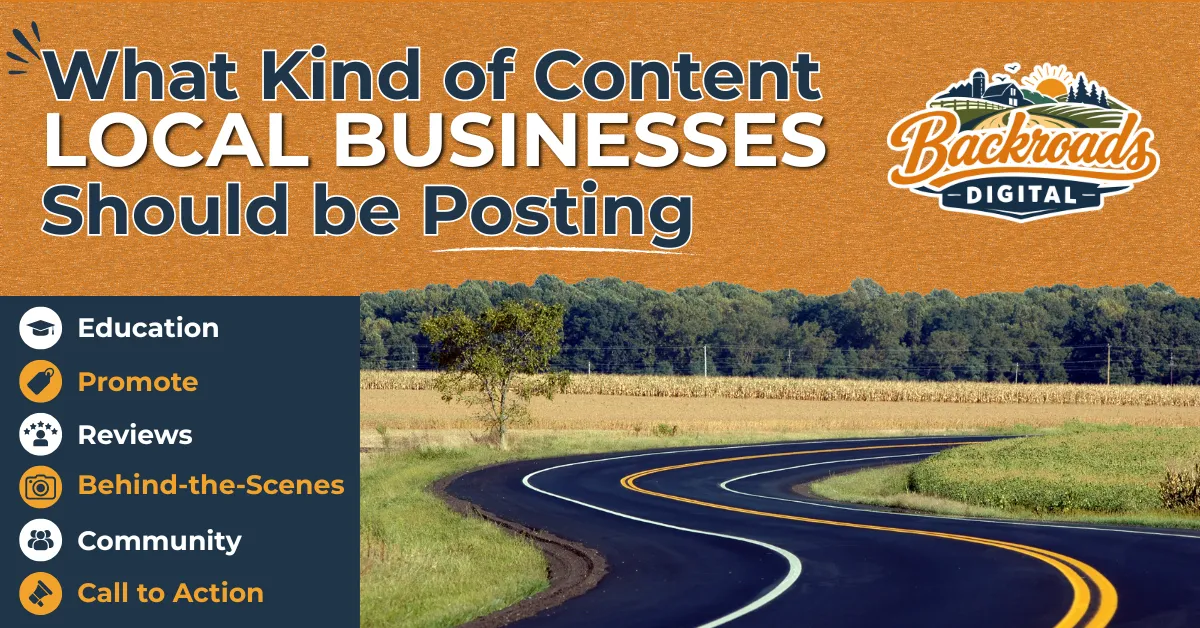
Small businesses can build trust on social media by posting content that is consistent, useful, and authentic.

Here are a few types of posts that work well:
Behind-the-scenes posts
Show your team, your process, your workspace, or what goes into serving your customers.

Before-and-after posts
These are great for service businesses, contractors, cleaners, designers, landscapers, and many other industries.

Customer-focused posts
Answer common questions, explain your services, or help people understand what to expect.

Review and testimonial posts
Share positive customer feedback in a professional and visually appealing way.

Product or service highlights
Remind people what you offer and how it helps them.

Local/community posts
Show that your business is connected to the area you serve.

Promotional posts
Share specials, offers, seasonal services, events, or limited-time opportunities.

Educational posts
Teach people something helpful related to your industry.


The goal is not to post randomly. The goal is to show people that your business is active, capable, helpful, and trustworthy.

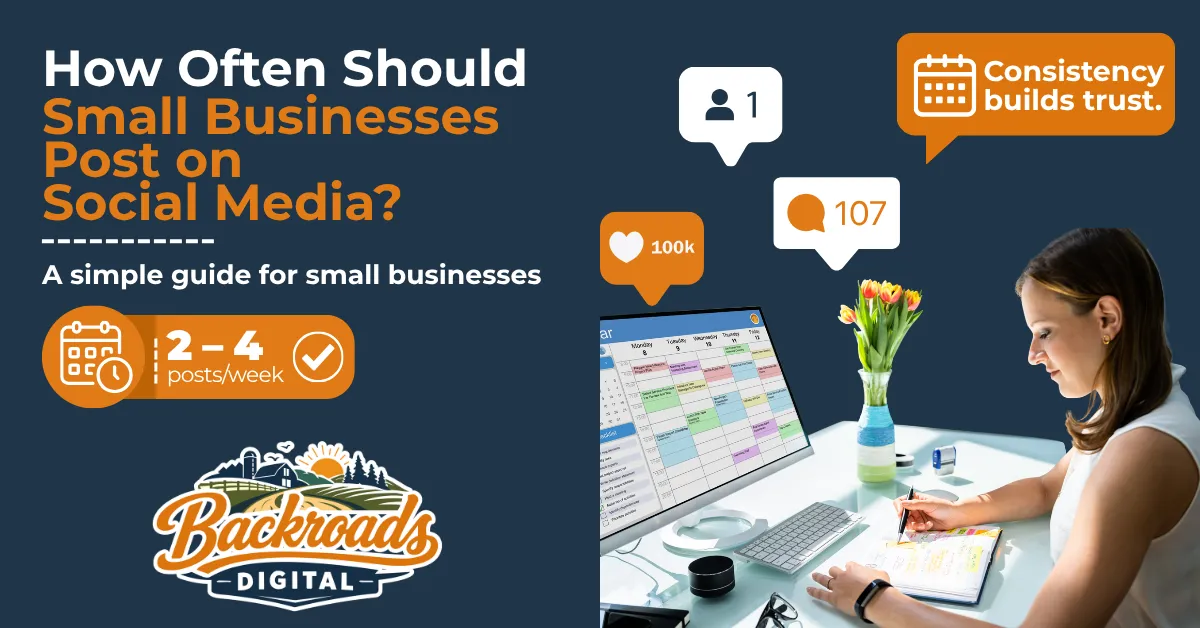
How Often Should a Small Business Post on Social Media?
Most small businesses should aim to post consistently rather than constantly.

For many local businesses, posting two to three times per week is a strong starting point. This keeps your page active without overwhelming your audience or creating unnecessary pressure.

The right posting schedule depends on your industry, audience, and goals. A restaurant may benefit from frequent posts about specials and events. A service business may focus more on educational posts, project photos, and customer trust-building content.

The most important thing is consistency.

A simple, realistic schedule is better than posting every day for two weeks and then disappearing for three months.

Social Media Supports the Entire Customer Journey
Social media does not only help people discover your business. It supports the entire customer journey.

Someone may first see your post because a friend shared it. Later, they may visit your page to learn more. Then they may check your reviews, look through photos, visit your website, and eventually call or message you.

Your social media is one piece of a larger online presence.

It works alongside your website, Google Business Profile, reviews, search engine visibility, and word-of-mouth referrals.

When all of those pieces work together, your business becomes easier to find and easier to trust.

The Bottom Line: Trust Starts Before the Call
By the time someone calls your business, they may have already formed an opinion about you.

Your social media helps shape that opinion.

If your content is consistent, professional, helpful, and authentic, it can build trust before the first conversation ever happens. It can make potential customers feel more comfortable, more informed, and more confident about choosing your business.

For small businesses, that matters.

Social media is not just about getting attention. It is about earning trust.

And when people trust your business, they are much more likely to take the next step.

Need Help Building Trust Online?
Backroads Digital helps small businesses strengthen their online presence through social media management, content creation, website support, and digital marketing strategy.

If your business needs more consistent, professional, and trustworthy social media content, we can help you show up online with confidence.

​Contact Backroads Digital today to start building a stronger online presence for your business.

Social Media Management Services
Contact Us
Frequently Asked Questions

How does social media build trust for a small business?

Social media builds trust by showing that your business is active, professional, helpful, and engaged with customers. Consistent posts, real photos, reviews, educational content, and clear communication all help potential customers feel more confident before they contact you.

Does my business need to post every day?
No. Most small businesses do not need to post every day. A consistent schedule of two to three quality posts per week is often enough to keep your business visible and active online.

What kind of social media posts build the most trust?
Posts that build trust include customer reviews, before-and-after photos, behind-the-scenes content, educational tips, service explanations, team introductions, and posts that answer common customer questions.

Can social media help people choose my business over a competitor?
Yes. If a potential customer compares your business to a competitor and your social media looks more active, professional, and helpful, it can make your business feel like the safer and more trustworthy choice.

Why is an inactive social media page bad for business?
An inactive page can make people wonder if your business is still open or reliable. Outdated posts, old promotions, and missing information can create doubt and cause potential customers to choose another business.

How can Backroads Digital help with social media marketing?
Backroads Digital helps small businesses create consistent, professional social media content that builds trust, improves visibility, and supports long-term online growth.

Why Your Business Needs Marketing Even When You’re Busy

5/29/2026

 
Small business owner working during a busy day while marketing notifications, social media posts, and customer messages continue in the background.
The Short AnswerYour business needs marketing even when you’re busy because today’s marketing creates tomorrow’s customers. If you only market when things slow down, you are always reacting instead of building steady momentum.

For small business owners, being busy feels like a good reason to pause marketing. After all, if the phone is ringing, customers are coming in, and your schedule is full, marketing can feel unnecessary.

But that is exactly when marketing matters most.

Marketing is not just about getting customers today. It is about staying visible, building trust, staying ahead of competitors, and keeping your business top-of-mind for the people who will need you next week, next month, or next season.

Being Busy Does Not Mean You Can Stop Being Visible
A common mistake small business owners make is treating marketing like an emergency button.

When business is slow, they post more.
When sales drop, they start advertising.
When the phone stops ringing, they update their website.
When competitors get attention, they suddenly remember social media exists.


The problem is that marketing works best when it is consistent.

If your business disappears during busy seasons, people may assume you are closed, inactive, unavailable, or simply not thinking about them. Meanwhile, your competitors are still showing up in their feed, search results, email inbox, and community conversations.

Visibility builds familiarity. Familiarity builds trust. Trust leads to sales.

Even if someone does not need your product or service today, consistent marketing helps make sure they remember you when they do.

Busy Seasons Are the Best Time to Build Future Demand
When business is going well, it is tempting to focus only on the work in front of you. That makes sense. Customers need service. Orders need to be filled. Jobs need to be completed.

But while you are serving today’s customers, your marketing should still be planting seeds for the next ones.

A busy season gives you more proof to share:
  • Customer testimonials
  • Behind-the-scenes photos
  • Finished projects
  • Popular products
  • Frequently asked questions
  • Seasonal promotions
  • Team highlights
  • Community involvement
  • Before-and-after examples
  • Helpful tips related to your industry

That kind of content is powerful because it shows people that your business is active, trusted, and worth choosing.

When your business looks busy, healthy, and helpful online, it creates confidence. People are more likely to trust a business that appears active and engaged than one that has not posted in months.

Marketing Keeps You from Starting Over Every Time Things Slow Down
If you stop marketing every time you get busy, you create a cycle that is hard to escape.

Business gets busy.
You stop marketing.
The busy season ends.
Leads slow down.
You start marketing again.
It takes time to regain attention.
Then you get busy and stop again.


This cycle keeps your business in reaction mode.

Consistent marketing helps smooth out the highs and lows. It keeps your business visible even when you do not have time to think about promotion. That way, when a slower season arrives, you are not starting from scratch.

Your audience has still been hearing from you.
Your social pages still look alive.
Your website still has fresh content.
Your Google Business Profile still shows activity.
Your brand still feels familiar.


That consistency gives your business a stronger foundation.

Your Competitors Are Still Marketing
Even if you are busy, your competitors may still be showing up.

They may be posting on Facebook.
They may be running ads.
They may be updating their Google Business Profile.
They may be publishing blog posts.
They may be collecting reviews.
They may be answering common customer questions online.


The businesses that stay visible are often the ones customers remember first.

This does not mean you have to outpost, outspend, or outdo everyone. But it does mean your business should not go silent.

People are constantly being reminded of other options. If your business is not part of that conversation, you risk being forgotten even by people who already like what you offer.

Marketing Is Not Just for New Customers
Another reason to keep marketing when you are busy is that marketing also serves your existing customers.

Your current customers need reminders too.

They need to know about:
  • New products or services
  • Updated hours
  • Seasonal specials
  • Events
  • Booking availability
  • Holiday schedules
  • Menu changes
  • Promotions
  • Helpful tips
  • Important announcements

A customer who already knows and trusts your business is often easier to bring back than a brand-new customer is to win over.

Consistent marketing helps turn one-time buyers into repeat customers. It helps regular customers stay engaged. It gives people a reason to come back, book again, reorder, refer a friend, or share your content.

Consistent Marketing Builds Trust Before People Are Ready to Buy
Not every potential customer is ready to make a decision today.

Some are researching.
Some are comparing options.
Some are waiting for the right time.
Some are following your page quietly.
Some are seeing your name for the first time.


Marketing helps build trust during that waiting period.

A person may see your business several times before they ever contact you. They may read a blog post, see a Facebook post, notice a customer review, check your website, and then finally decide to reach out.

If your marketing disappears for long stretches of time, you lose those opportunities to build trust gradually.

People often choose the business they feel most comfortable with. Consistent marketing helps create that comfort before the sale ever happens.

Your Online Presence Works Even When You Are Not Working
One of the biggest benefits of marketing is that it can work for you even when you are busy.

A helpful blog post can answer questions while you are serving customers.
A strong website can explain your services while you are on a job.
A Google Business Profile can help people find your hours, location, phone number, and reviews.
A social media post can remind someone to stop by, book an appointment, or send a message.
An email campaign can bring past customers back without you personally reaching out to each one.


Good marketing gives your business a digital presence that works around the clock.

That does not mean marketing replaces personal service. It means marketing supports it. It helps people understand who you are, what you offer, and why they should choose you before they ever talk to you.

Marketing Helps You Control the Story
If your business is not actively telling people what you do, what makes you different, and how you can help, then customers are left to figure it out on their own.

That can lead to confusion.

​They may not know all the services you offer.
They may not understand your process.
They may not realize you serve their area.
They may not know you are accepting new customers.
They may not know about your specials, events, or seasonal offers.


Marketing helps you guide the conversation.


It gives you a chance to answer common questions, overcome objections, highlight your strengths, and show customers what makes your business worth choosing.


For local businesses, this is especially important. People want to know who they are supporting. They want to feel connected. They want to see personality, reliability, and proof that your business is active in the community.


You Do Not Need More Complicated Marketing...You Need Consistent Marketing
Many small business owners avoid marketing because they think it has to be complicated.

It does not.


You do not need to post every day.
You do not need to chase every trend.
You do not need to be on every platform.
You do not need to make every piece of content perfect.


You need a clear, consistent plan.


That might include:
  • Posting to Facebook and Instagram a few times per week
  • Keeping your Google Business Profile updated
  • Publishing helpful blog content
  • Asking happy customers for reviews
  • Running occasional ads for important promotions
  • Sending regular emails or texts to your customer list
  • Making sure your website clearly explains your services

The goal is not to do everything. The goal is to keep your business visible in the places your customers are already looking.


What Should a Busy Business Owner Focus On First?
If you are busy and do not have much time for marketing, start with the basics.

First, make sure your website is clear. People should quickly understand what you offer, where you are located, who you serve, and how to contact you.


Second, keep your Google Business Profile updated. For local businesses, this is one of the most important tools for showing up in local search.


Third, post consistently on social media. Your posts do not have to be complicated. Share specials, updates, customer questions, helpful tips, behind-the-scenes photos, and reminders.


Fourth, collect reviews. Reviews help build trust and can influence whether someone chooses your business over another local option.


Fifth, create content that answers common questions. Blog posts, FAQs, and social media captions can help your business show up when people search online or ask AI tools for recommendations.


Why This Matters for Local Businesses
Local businesses depend on trust, recognition, and community awareness.

People may drive past your business every day and still forget about you when they need what you offer. They may follow your page but miss your updates. They may know your name but not know everything you do.


Consistent marketing keeps reminding people.


It says, “We’re here.”
It says, “We’re active.”
It says, “We can help.”
It says, “Remember us when you need this.”


For small-town and local businesses, that steady presence can make a major difference.


You are not just competing with businesses down the street. You are also competing with big brands, online options, larger companies, and every other distraction fighting for your customer’s attention.


Marketing helps you stay in the conversation.


Frequently Asked Questions About Marketing When You’re Busy

Do I still need marketing if I already have plenty of customers?

Yes. Marketing is not only for getting more customers right now. It also helps you stay visible, build trust, keep repeat customers engaged, and prepare for slower seasons.

How often should a small business post on social media?
Most small businesses benefit from posting consistently a few times per week. The exact number depends on your industry, audience, and goals, but consistency matters more than posting constantly.

What is the biggest marketing mistake busy business owners make?
The biggest mistake is stopping all marketing when business is good. This often leads to slower future sales because the business stops staying visible to potential customers.

What marketing tasks matter most for a local business?
The most important marketing tasks for many local businesses are maintaining a clear website, updating their Google Business Profile, posting consistently on social media, collecting reviews, and creating helpful content.

Can marketing help prevent slow seasons?
Marketing cannot guarantee that slow seasons will disappear, but consistent marketing can help reduce the impact by keeping your business visible, attracting repeat customers, and building future demand.

Final Thoughts
Being busy is a good thing. But it should not be the reason your marketing disappears.

The best time to market your business is not only when you are slow. It is when things are going well, when customers are engaged, when you have proof to share, and when your business has momentum.


Consistent marketing helps your business stay visible, trusted, and remembered.

If you wait until things slow down to start marketing, you are already behind. But if you keep showing up even when business is busy, you build a stronger foundation for the future.

Need Help Keeping Your Marketing Consistent?
At Backroads Digital, we help small businesses stay visible online without adding more to the owner’s already full plate.

From social media management and content planning to websites, SEO, and local marketing strategy, we help your business keep showing up even when you are too busy to handle it yourself.


If your business is busy now, that is great. Let’s make sure it stays that way.


​Contact Backroads Digital today to build a marketing plan that keeps your business visible, consistent, and ready for what’s next.
Our Marketing Services
Tell us how we can help!

How Marketing Helps You Compete With Bigger Companies

5/21/2026

 
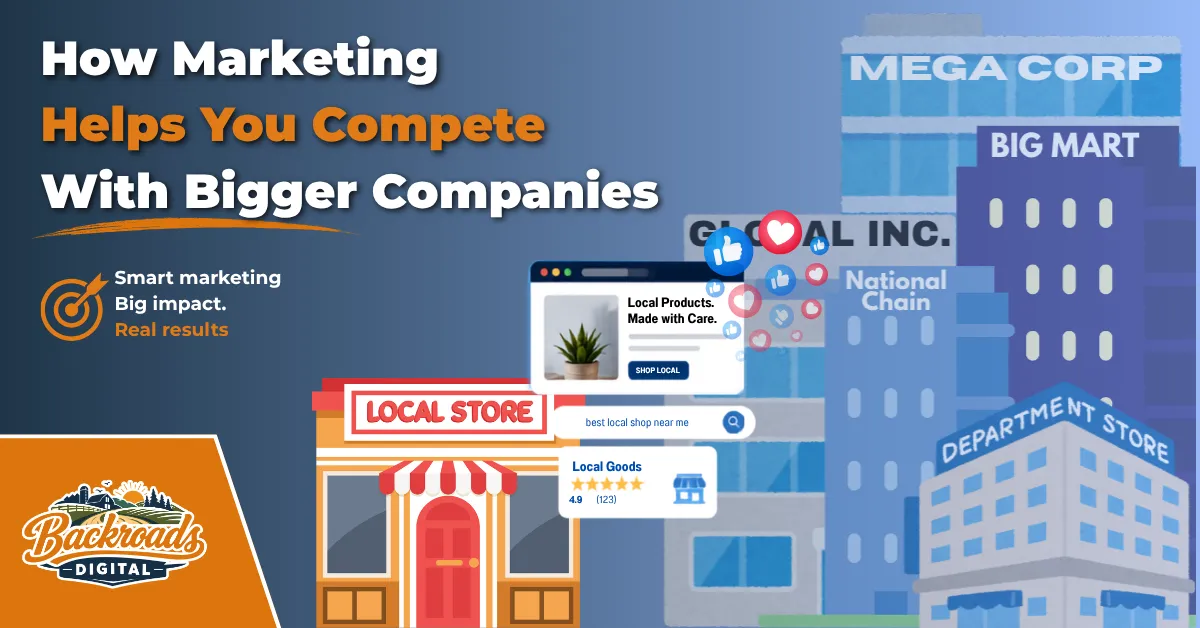
Small business owner using digital marketing to compete with larger companies online.
Small businesses do not always have the biggest budgets, the largest teams, or the most recognizable names.

But that does not mean they cannot compete.

In fact, with the right marketing strategy, small businesses can stand out, build trust, reach local customers, and compete with larger companies in ways that actually feel more personal and effective.

At Backroads Digital, we help small businesses use marketing to get seen online, stay consistent, and connect with the people who are already looking for what they offer.

Bigger Companies Have Brand Recognition — But You Can Build Local Trust

Large companies often win because people recognize their names. They have been seen over and over again, so customers remember them when it is time to buy.

That is exactly what consistent marketing helps your business do.
Every social media post, website update, Google Business Profile post, review response, blog article, and ad helps put your business in front of people again and again.

The more often people see your business, the more familiar you become.
And familiarity builds trust.

For small businesses, this is especially powerful because you are not just trying to be known everywhere. You are trying to be known by the right people in your community.

Marketing Helps You Show Up Where Customers Are Looking

When someone needs a service or product, they usually start with one of three places:

Google, social media, or word-of-mouth.

Marketing helps your business show up in those moments.

A strong online presence can help your business appear when someone searches for things like:
“restaurants near me”
“website designer near me”
“best local service in Bonham TX”
“social media help for small business”
“local business near me”

If your business is not showing up online, there is a good chance your competitors are.

That does not mean you need to outspend bigger companies. It means you need to be visible, clear, and consistent where your customers are already paying attention.

Small Businesses Can Be More Personal Than Big Companies

One of the greatest advantages small businesses have is personality.

Big companies often feel corporate, scripted, and distant. Small businesses can feel real, local, and relatable.

Your marketing should show that.

You can share your story, highlight your team, talk about your community, showcase customer experiences, and speak directly to the people you serve.

That personal connection matters.

People do not always choose the biggest company. Many times, they choose the business they feel like they know, trust, and want to support.

Good marketing helps you make that connection before a customer ever walks through the door, calls your number, or fills out a form.

Your Website Works Like a Digital Storefront

Your website is often the first serious impression someone gets of your business.

Even if they discover you on Facebook, Instagram, or Google, many customers will still visit your website before making a decision.

A professional website helps your business look established, trustworthy, and easy to work with.

Your website should clearly answer questions like:

What do you offer?
Who do you serve?
Where are you located?
How can someone contact you?
Why should they choose you?

Bigger companies usually have polished websites. But a small business website does not have to be complicated to compete. It just needs to be clear, professional, mobile-friendly, and built with your customers in mind.

Social Media Keeps Your Business in Front of People

Social media is one of the most practical ways for small businesses to stay visible.

You do not have to post every hour. You do not have to go viral. You do not have to create perfect content.

But you do need to show up consistently.

When people see your business regularly in their feed, they are reminded that you exist. They see your offers, your personality, your work, your events, your specials, and your value.

Then, when they need what you offer, your business is more likely to be the one they remember.

That is how consistent content helps small businesses compete.

SEO Helps Customers Find You Without Paid Ads

Search Engine Optimization, or SEO, helps your website show up better on Google.

For small businesses, local SEO is especially important.

This includes things like optimizing your website, writing helpful blog content, improving your Google Business Profile, using location-based keywords, and making sure your business information is accurate online.

The goal is simple: when people search for what you offer, your business should have a better chance of showing up.

SEO is not instant, but it builds long-term visibility. While paid ads stop working when the budget stops, strong SEO can continue helping people find your business over time.

Marketing Makes Your Business Look Active and Reliable

Customers notice when a business looks inactive online.

If your last Facebook post was from two years ago, your website is outdated, or your Google Business Profile has missing information, people may wonder if you are still open or if the information is accurate.

That hesitation can cost you customers.
Consistent marketing shows people that your business is active, attentive, and ready to serve them.

It tells customers, “We are here. We are open. We are ready to help.”

That matters, especially when you are competing against larger companies that may already have a strong online presence.

You Do Not Have to Market Like a Big Company

Small businesses do not need to copy big corporations.

You do not need a massive advertising budget, a full marketing department, or complicated campaigns.

You need a practical strategy that fits your business.

That may include:
A professional website
Consistent social media posts
Local SEO
Google Business Profile optimization
Blog content
Simple digital ads
Clear calls-to-action
Strong visuals and messaging

The goal is not to look like a giant company. The goal is to look professional, trustworthy, and easy to choose.

Marketing Helps Level the Playing Field

Bigger companies may have more resources, but small businesses have something powerful: local relationships, personal service, and community trust.

Marketing helps bring those strengths to the surface.

It helps people discover you, remember you, trust you, and choose you.

When done well, marketing does not just make your business look bigger. It makes your business look clearer, more professional, and more connected to the people you serve.

Need Help Competing Online?

If your business has been relying mostly on word-of-mouth, occasional posts, or an outdated website, now is a great time to strengthen your online presence.

Backroads Digital helps small businesses get seen online through social media, websites, SEO, and digital advertising.


Whether you need help staying consistent on social media, improving your website, or showing up better on Google, we can help you build a marketing strategy that works for your business.

​Ready to compete online? Contact Backroads Digital today and let’s help your business get seen.


Contact Us
Marketing Services

Save Your Old Family Videos Before They’re Gone

5/16/2026

 
Graphic for Backroads Digital promoting VHS, DVD, and old media digitizing in Northeast Texas, featuring old family videos, a VHS tape, DVD, camcorder tapes, and digital file icons to show memories being preserved before they are gone.
Your old home videos are more than just tapes, discs, and plastic cases. They are birthdays. Christmas mornings. First steps. School programs. Family reunions. Weddings. Ball games. Voices of loved ones you may not get to hear again.

But here is the hard truth: old media was not made to last forever.

VHS tapes wear down. DVDs scratch and degrade. Camcorder tapes get brittle. Even if they have been sitting safely in a closet for years, time is still working against them.

At Backroads Digital, we help families, churches, and local businesses preserve their old videos by converting VHS tapes, DVDs, and other aging media into digital files that are easier to watch, share, and protect for the future.

Your Old VHS Tapes Are Aging Every Day
VHS tapes may look fine on the outside, but the tape inside can slowly break down over time.

The magnetic tape can weaken. The picture can become fuzzy. Audio can distort. Tapes can stretch, wrinkle, or snap. If they have been stored in heat, humidity, garages, attics, sheds, or storage units, the risk is even higher.

Common signs your VHS tapes may be aging include:
  • Fuzzy or distorted picture
  • Static lines across the screen
  • Warped or muffled audio
  • Tapes that stick, drag, or will not play smoothly
  • Mold, dust, or visible damage inside the cassette
  • The VCR “eating” the tape

The longer you wait, the greater the chance that those memories may become harder, or even impossible, to recover.

DVDs Can Wear Out Too
A lot of people assume DVDs are safer than VHS tapes, but DVDs are not permanent either.

DVDs can get scratched, cracked, warped, or damaged from normal handling. Even discs that have been stored in cases can eventually have playback issues. Homemade DVDs, burned discs, and older recorded discs are especially vulnerable because they may not hold up as well over time.

DVD problems can show up as:
  • Skipping or freezing
  • Sections that will not play
  • Audio and video glitches
  • The disc not being recognized by a DVD player or computer
  • Scratches that make the video unreadable

Once a DVD fails, the video on it may be difficult or impossible to retrieve. That is why converting DVDs to digital files is a smart way to protect the memories stored on them.

What About Camcorder Tapes and Other Old Media?
Many families have more than just VHS tapes and DVDs.

You may have old camcorder tapes, mini DVDs, VHS-C tapes, Hi8 tapes, Digital8 tapes, MiniDV tapes, or other older video formats packed away in drawers, boxes, or closets.

The problem is not just that these formats are aging. It is also getting harder to find working equipment to play them.

Even if your tape is still in decent condition, you may not have the camera, adapter, VCR, or player needed to watch it anymore. As time goes on, those devices become harder to find and more likely to fail.

Digitizing your old media gives you a way to enjoy those memories without depending on outdated equipment.

Why You Should Digitize Old Videos Now
There is real urgency when it comes to preserving old tapes and discs.

Every year that passes increases the risk of damage, quality loss, or complete failure. You may only get one good chance to capture what is on that tape or disc before it wears out.

Digitizing your old media helps you:
  • Preserve family memories before tapes and discs fail
  • Watch old videos on modern devices
  • Share videos with family members more easily
  • Back up important memories in multiple places
  • Clear out boxes of outdated media
  • Protect videos from physical damage, scratches, and tape wear
  • Keep memories accessible for future generations

Digital files are not tied to one old tape, one fragile disc, or one outdated player. Once your videos are converted, you can store them on a computer, external hard drive, USB drive, cloud storage, or all of the above.

Digital Preservation Makes Sharing Easier
One of the best parts of converting old videos to digital is how easy they become to share.

Instead of mailing a VHS tape to a family member or trying to find someone with a working DVD player, you can send a digital file, upload it to cloud storage, make copies for relatives, or keep it safely backed up.

That means your family memories no longer have to sit in a box untouched.

They can be watched again. Shared again. Enjoyed again.

Your kids, grandkids, siblings, cousins, and extended family can experience moments that may have been hidden away for years.

Backroads Digital Can Help Preserve Your Memories
At Backroads Digital, we offer media digitizing services to help preserve old videos before they are lost to time.

Whether you have a few VHS tapes or a box full of old family media, we can help convert those memories into digital files so they are easier to watch, save, and share.

This service is a great fit for:
  • Families with old home videos
  • Churches with archived services or events
  • Schools with old programs or recordings
  • Local businesses with old promotional footage
  • Anyone with VHS tapes, DVDs, or older video formats sitting in storage

Your memories matter. They should not be trapped on aging tapes or scratched discs.

Do Not Wait Until It Is Too Late
It is easy to put off digitizing old videos because they have already been sitting there for years.

But old media does not wait.

Tapes continue to age. DVDs continue to wear. Players become harder to find. And once a video is damaged beyond recovery, that moment may be gone for good.

If you have old VHS tapes, DVDs, camcorder tapes, or other media, now is the time to protect them.

Backroads Digital can help you preserve your memories before they fade, break, or disappear.

Ready to Digitize Your Old Videos?
If you have old tapes or DVDs sitting in a closet, box, attic, or drawer, let’s get them converted before they wear out.

Contact Backroads Digital today to ask about VHS, DVD, and old media digitizing services in Bonham and Northeast Texas.

​Your memories are worth saving. Let’s preserve them while we still can.
See our Digitizing Packages!

What is a Google Business Profile and Why it Matters

5/7/2026

 
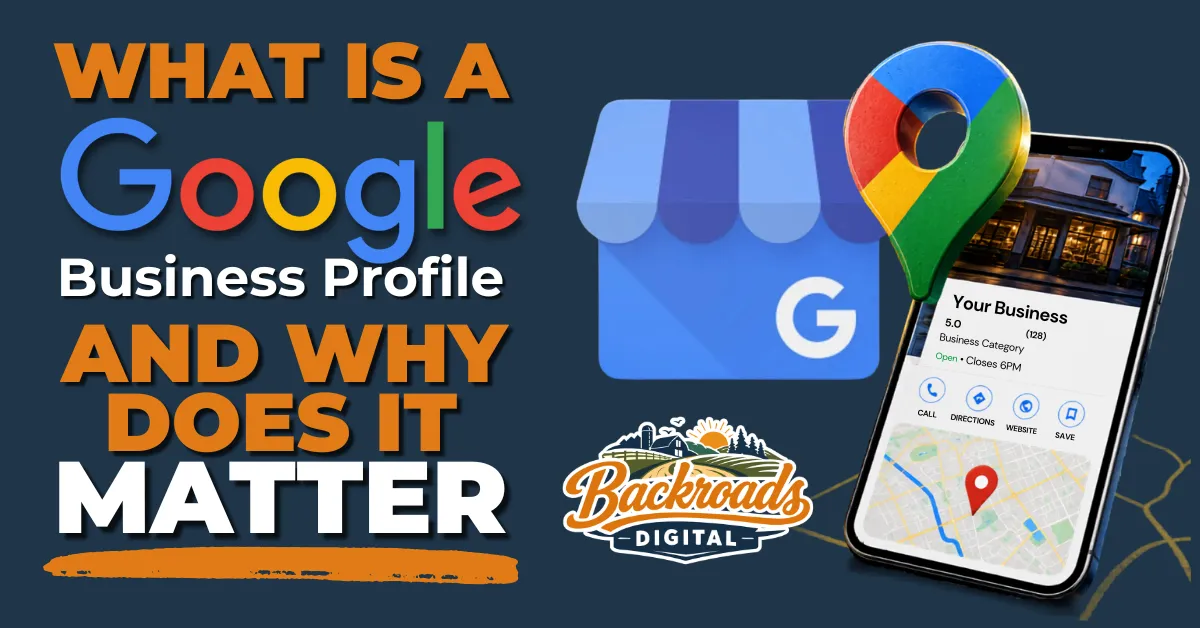
Graphic explaining Google Business Profile with bold title text and a smartphone showing a local business listing on Google Maps, highlighting local SEO and online visibility.
​If you’ve ever searched for a local business on Google and seen a box pop up with a map, reviews, hours, and photos—you’ve already seen a Google Business Profile in action.
But for small businesses, especially in small towns across North Texas, this tool isn’t just helpful—it’s essential.
Let’s break down what it is and why it matters.


What Is a Google Business Profile?
A Google Business Profile (GBP) is a free listing that allows your business to appear in local search results and on Google Maps.
It includes key information like:
  • Business name
  • Address and phone number
  • Website
  • Hours of operation
  • Photos
  • Customer reviews
When someone searches for services like “pizza near me” or “marketing agency in Bonham,” Google uses these profiles to decide which businesses to show.


Where Does Your Business Show Up?
Your Google Business Profile helps you appear in three major places:
1. Google Search Results
When someone searches your business name (or a service you offer), your profile can appear on the right-hand side or at the top of the page.
2. Google Maps
Your business becomes visible to people actively looking for directions or nearby options.
3. The Local Pack (Top 3 Listings)
This is the most valuable real estate on Google for local businesses—the top three map listings that show up before anything else.
If you're not showing up here, you're likely missing out on customers.


Why Your Google Business Profile Matters
1. It Helps People Find You
Most customers start their search online—even for local businesses. If your profile isn’t optimized, you may not show up at all.


2. It Builds Trust Instantly
Your reviews, photos, and activity tell potential customers whether your business is worth their time.
A profile with:
  • Updated photos
  • Recent reviews
  • Accurate information
…builds credibility before someone ever calls you.


3. It Drives Real Customers (Not Just Clicks)
A well-optimized profile leads to:
  • Phone calls
  • Website visits
  • Direction requests
These are real actions from real people looking to do business.


4. It Gives You an Edge Over Competitors
Many small businesses either:
  • Don’t claim their profile
  • Don’t update it
  • Or don’t optimize it
That creates a huge opportunity. Even basic improvements can help you outrank competitors.


5. It Supports Your SEO Strategy
Your Google Business Profile plays a major role in local SEO.
Google looks at:
  • Relevance (what you offer)
  • Distance (how close you are)
  • Prominence (reviews, activity, and authority)
Your profile directly impacts all three.


What Makes a Strong Google Business Profile?
To get results, your profile needs more than just basic info.
Here’s what matters most:
  • Consistent Business Information (Name, Address, Phone)
  • Keyword-optimized description
  • High-quality photos
  • Regular updates/posts
  • Consistent review generation
  • Accurate categories and services


Common Mistakes We See All the Time
Many businesses unknowingly hurt their visibility by:
  • Leaving their profile incomplete
  • Using outdated hours or contact info
  • Never posting updates
  • Ignoring reviews
  • Choosing the wrong business category
These small issues can make a big difference in whether you show up—or get skipped.


Final Thoughts
Your Google Business Profile is often the first impression people get of your business.
And in many cases, it determines whether they choose you…or your competitor.
If you want more visibility, more calls, and more customers, this is one of the most important tools you can invest time into—especially because it’s free.


Need Help Getting Found Online?
If you’re not sure how your business is showing up on Google—or if it’s showing up at all—we can help.
👉 We’ll take a look at your Google presence and show you exactly what’s working and what’s not.
Ask for a FREE Google Presence Review!

How Blog Content Helps Your Website Rank on Google

5/1/2026

 
Picture
​If you’ve ever wondered why some businesses show up on Google while others don’t…
blog content is a big part of the answer.
Most small businesses think their website is “done” once it’s built.
But here’s the truth:
👉 A website without ongoing content is like a storefront with the lights off.
👉 Blogging is how you turn the lights on—and keep them on.
Let’s break down how blog content actually helps your website rank on Google—and why it matters for your business.


1. Blog Content Gives Google More Pages to Index
Every blog post you publish is a new page on your website.
That means:
  • More opportunities to show up in search results
  • More keywords your site can rank for
  • More ways customers can find you
If your website only has 5 pages (Home, About, Services, etc.), you’re giving Google very little to work with.
But if you consistently add blog posts?
Now you’ve got 20… 50… even 100+ pages working for you.
👉 More pages = more chances to get found.


2. Blogs Help You Target Real Search Keywords
People don’t search for vague things like:
“good business near me”
They search for specific questions like:
  • “best pizza in Bonham TX”
  • “how to fix a slow website”
  • “do I need SEO for my small business”
Blog posts allow you to target those exact searches.
Instead of hoping people find your homepage…
👉 You meet them where they’re already searching.
That’s how small businesses compete with bigger companies online.


3. Fresh Content Signals Activity to Google
Google doesn’t just care what is on your site…
it cares if your site is active.
A website that hasn’t been updated in years sends a signal:
“This business might not be active.”
But when you regularly publish blog content?
👉 You show Google your business is alive, active, and relevant.
This can help improve your rankings over time.


4. Blog Content Builds Authority and Trust
When your website consistently answers questions and provides helpful information, two things happen:
  1. Google trusts your site more
  2. People trust your business more
For example, if someone finds your blog post and it helps them…
You’ve already built credibility before they ever call you.
👉 Visibility builds trust.
And trust leads to clicks, calls, and customers.


5. Blogs Support Your Local SEO Strategy
For local businesses, this is huge.
You can create blog posts that target:
  • Your city (Bonham, Paris, Sherman, etc.)
  • Nearby towns
  • Local events or topics
Example:
  • “Best Family Restaurants in Bonham, Texas”
  • “What to Look for in a Local Plumber in North Texas”
Now you’re not just showing up for general searches…
👉 You’re showing up for local searches that actually convert.


6. Blog Content Keeps Working Long-Term
Social media posts disappear fast.
But blog posts?
They keep working for you months—and even years—after you publish them.
One solid blog post can:
  • Bring in consistent traffic
  • Generate leads over time
  • Rank higher as it ages
👉 It’s one of the few marketing tools that compounds.


7. Blogs Create Content You Can Reuse Everywhere
Here’s a bonus most businesses overlook:
A single blog post can turn into:
  • Multiple social media posts
  • Email content
  • Short videos or reels
  • Website updates
👉 One piece of content turns into 5–10 pieces across your marketing.
That’s how you stay consistent without constantly starting from scratch.


So… Do You Actually Need a Blog?
If you want your business to show up on Google…
👉 Yes.
You don’t need complicated strategies.
You don’t need to post every day.
But you do need:
  • Clear content
  • Consistent updates
  • A plan to target what people are searching for


Final Thoughts
Most small businesses don’t need more marketing…
They need to be found first.
And blog content is one of the most effective ways to make that happen.
If your website isn’t bringing in traffic, leads, or calls—there’s a good chance it’s missing consistent, strategic content.


Want Help Getting Your Business Found?
If you’re not sure what your website should be ranking for…
👉 We can take a look.
At Backroads Digital, we help small-town businesses show up on Google with simple, effective strategies—no complicated marketing required.
Website/SEO Packages

How Google Decides Which Local Businesses Show Up First

4/17/2026

 
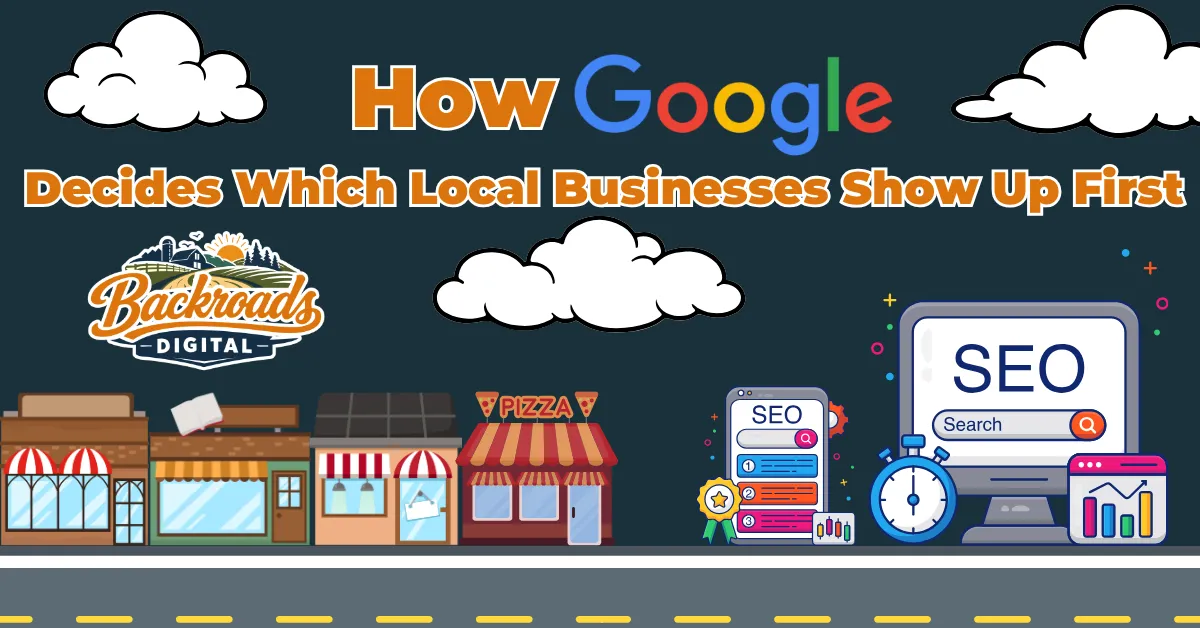
Picture
​Have you ever wondered why some businesses show up at the top of Google… while others don’t appear at all?
It’s not random.
When someone searches something like:
  • “pizza near me”
  • “plumber in Bonham TX”
  • “digital marketing company near me”
Google is using a set of factors to decide which local businesses to show first.
Understanding how this works can help you improve your visibility—and bring in more customers.
Let’s break it down in plain English.


The 3 Main Factors Google Uses for Local Rankings
Google has stated that local search rankings are based on three key factors:
  1. Relevance
  2. Distance
  3. Prominence
These three elements work together to determine which businesses appear in local search results.


1. Relevance: How Well You Match the Search
Relevance is about how closely your business matches what someone is searching for.
For example, if someone searches:
👉 “SEO services in North Texas”
Google looks for businesses that clearly offer:
  • SEO services
  • In that location
This is where local SEO optimization matters.
Google uses information from:
  • Your website content
  • Your Google Business Profile
  • Your services and categories
  • Keywords used on your site
How to Improve Relevance:
  • Clearly describe your services
  • Use location-based keywords (ex: “website design in Bonham TX”)
  • Optimize your service pages
  • Keep your Google Business Profile updated
The clearer you are, the easier it is for Google to understand your business.


2. Distance: How Close You Are to the Searcher
Distance is exactly what it sounds like.
Google considers how close your business is to the person searching.
If someone searches “restaurant near me,” Google will prioritize businesses that are physically closer to that user.
Even if your business is great, distance can still impact whether you show up first.
Important Note:
You can’t control where someone is searching from—but you can expand your reach by:
  • Targeting nearby cities
  • Creating location-based content
  • Optimizing for multiple service areas
This helps Google understand where you do business.


3. Prominence: How Well-Known and Trusted You Are
Prominence is where things get interesting.
This is Google’s way of measuring how credible and established your business appears online.
It includes factors like:
  • Reviews and ratings
  • Number of reviews
  • Website quality
  • Backlinks (other sites linking to you)
  • Online mentions
  • Overall online presence
A business with strong reviews and a solid website will often rank higher than one without them.


The Role of Google Business Profile (GBP)
Your Google Business Profile (formerly Google My Business) plays a huge role in local rankings.
This is what shows up in the map results (the “local pack”).
A well-optimized profile includes:
  • Accurate business name
  • Correct categories
  • Services listed
  • Updated hours
  • Photos
  • Customer reviews
If your profile is incomplete, you’re at a disadvantage.


Reviews Matter More Than You Think
Reviews are one of the biggest factors in local SEO.
They impact:
  • Rankings
  • Trust
  • Click-through rates
Businesses with more positive reviews are more likely to:
  • Show up higher
  • Get more clicks
  • Get more customers
Tips for Reviews:
  • Ask happy customers to leave reviews
  • Respond to reviews (both positive and negative)
  • Keep them consistent over time


Your Website Still Matters
Even though Google Business Profile is important, your website is still a major ranking factor.
Google looks at:
  • Website speed
  • Mobile-friendliness
  • Content quality
  • Keyword usage
  • Page structure
A well-optimized website helps improve both relevance and prominence.


Consistency Across the Internet (NAP)
Google also checks your business information across the web.
This includes your:
  • Name
  • Address
  • Phone number
(Also known as NAP consistency)
If your information is inconsistent across directories, it can hurt your rankings.


Content Helps You Get Found
Creating helpful content (like blogs) improves your chances of ranking.
For example:
  • “How much does SEO cost in Texas?”
  • “Best pizza in Bonham TX”
  • “Website tips for small businesses”
This helps Google see your business as relevant and knowledgeable.
Over time, this builds authority and visibility.


The Bottom Line
Google isn’t guessing when it ranks local businesses.
It’s evaluating:
  • How well you match the search (Relevance)
  • How close you are (Distance)
  • How trustworthy and visible you are (Prominence)
If you want to show up higher, you need to improve all three.


Final Thoughts
Getting to the top of local search results doesn’t happen overnight.
But with the right strategy, it’s absolutely possible.
Focus on:
  • Clear, optimized content
  • Strong Google Business Profile
  • Consistent reviews
  • A fast, mobile-friendly website
Over time, these efforts add up—and that’s what helps your business get found.


Want Help Getting Found on Google?
If you’re not sure where your business currently stands, we can help.
👉 Explore our Website & SEO Packages to improve your visibility and attract more local customers.
View our Website/SEO Packages

SEO Explained in Plain English for Business Owners

4/10/2026

 
Picture
If you’ve ever wondered why some businesses show up at the top of Google—and yours doesn’t—you’re not alone.
You’ve probably heard the term SEO thrown around, but it often sounds technical, confusing, or like something only big companies can afford.
Let’s fix that.
This guide breaks down SEO in plain English so you can understand what it is, why it matters, and how it actually helps your business grow.


What Is SEO (In Simple Terms)?
SEO stands for Search Engine Optimization.
In plain English:
SEO is how you help your business show up on Google when people are searching for what you offer.
Example:
  • Someone types: “pizza near me”
  • Or: “best fish fry in Bonham TX”
SEO is what determines:
  • Whether your business shows up
  • How high you rank
  • Whether people click on you instead of your competitor

Why SEO Matters for Small Businesses
Here’s the reality:
👉 Most people don’t scroll past the first page of Google
👉 Many don’t even scroll past the first 3 results
If your business isn’t showing up…
you’re missing customers who are already looking for you.
Unlike ads, SEO brings in consistent, long-term traffic without paying for every click.
Think of it like this:
  • Ads = renting attention
  • SEO = owning your visibility

How SEO Actually Works
Google’s job is simple:
Show people the best and most relevant results for what they search.
To decide that, Google looks at things like:
1. Relevance
Does your website match what someone is searching for?
Example:
  • If you run a pizza place, your site should clearly say:
    • Pizza
    • Menu
    • Location
    • Services

2. Quality Content
Do you have helpful, useful information?
This is where blogs come in.
Example blog topics:
  • “Best Pizza Toppings Ranked”
  • “Where to Watch the Game in [Your City]”
  • “Family-Friendly Restaurants in [Your Area]”
Content tells Google:
👉 “This business knows what they’re talking about.”

3. Location (Local SEO)
For local businesses, this is HUGE.
Google prioritizes businesses that are:
  • Near the person searching
  • Properly set up on Google Business Profile
  • Mentioning their city consistently

4. Website Experience
If your site is:
  • Slow
  • Hard to use on mobile
  • Confusing
Google will rank you lower.

5. Trust & Authority
Google also looks at:
  • Reviews
  • Backlinks (other sites linking to you)
  • Consistency across the internet

What SEO Looks Like in Real Life
Let’s make it practical.
If you own a restaurant, good SEO means:
✅ Your business shows up when people search “restaurants near me”
✅ Your Google profile is complete with photos and reviews
✅ Your website loads fast and looks good on phones
✅ You have content that answers common questions

The 3 Biggest SEO Mistakes We See
1. “Set It and Forget It” Websites
A website alone isn’t enough.
If it’s not updated or optimized:
👉 It won’t rank.

2. No Local Optimization
Many businesses forget to:
  • Add their city
  • Optimize their Google listing
  • Target local keywords
This is a huge missed opportunity.

3. No Content Strategy
No blogs = no growth.
Content is how you:
  • Rank for more searches
  • Stay relevant
  • Attract new customers

How Long Does SEO Take?
Let’s be honest:
👉 SEO is not instant.
Typically:
  • 1–3 months: Early movement
  • 3–6 months: Noticeable results
  • 6+ months: Strong growth
But once it starts working…
it keeps working.

Simple SEO Tips You Can Start Today
Here are a few quick wins:
✔ Make sure your website clearly says what you do
✔ Add your city (and nearby cities) throughout your site
✔ Claim and optimize your Google Business Profile
✔ Ask happy customers for reviews
✔ Start posting blogs regularly

Final Thoughts: Why SEO Is Worth It
If your business depends on customers finding you online, SEO isn’t optional anymore.
It’s the difference between:
  • Being found
  • Or being invisible
And the best part?
👉 Your competitors are probably not doing it well.

Want Help Showing Up on Google?
If you’re not sure where your business stands, we can help.
At Backroads Digital, we specialize in helping small-town businesses get found online through simple, effective SEO strategies.

👉 Let’s take a look at your website and show you exactly what’s working—and what’s not.
Website/SEO Services

Common Website Design Mistakes We See All the Time

4/2/2026

 
Picture
​A website doesn’t have to be complicated to be effective.
But it does need to be intentional.
Over time, we’ve worked with and reviewed a lot of small business websites—and we see the same issues come up again and again.
The frustrating part?
Most of these website design mistakes are fixable.
If your website isn’t bringing in calls, leads, or customers, one (or more) of these could be the reason.
Let’s walk through the most common website design mistakes we see—and how to avoid them.


1. No Clear Message on the Homepage
When someone lands on your website, they should instantly know:
  • What you do
  • Who you serve
  • Where you’re located
  • What to do next
Instead, many websites are vague or overly wordy.
If visitors have to “figure it out,” they won’t.
This is one of the biggest issues in small business website design.
Clear messaging improves both:
  • Website conversions
  • User experience

2. No Strong Call to Action (CTA)
A surprising number of websites don’t clearly tell visitors what to do next.
No “Call Now”
No “Request a Quote”
No “Schedule a Consultation”
Without a clear CTA, even interested visitors leave without taking action.
Every page should guide users toward something simple and specific.
Strong CTAs are a key part of website conversion optimization.

3. Slow Website Speed
We’ve said it before—and it’s worth repeating.
A slow website can cost you customers.
If your site takes too long to load:
  • Visitors leave quickly
  • Search rankings drop
  • Engagement decreases
Website speed is a major factor in both SEO for small businesses and user experience.
Even a few seconds can make a big difference.

4. Not Mobile-Friendly
Most people are visiting your website from their phone.
If your site isn’t mobile-friendly, you’re losing potential customers.
Common mobile issues include:
  • Tiny text
  • Buttons too small to tap
  • Poor layout
  • Slow loading
A responsive website design ensures your site works well on all devices.
This isn’t optional anymore—it’s essential.

5. Cluttered Layout
More is not always better.
Too much text
Too many images
Too many colors
Too many options
A cluttered website overwhelms visitors and makes it harder to take action.
Clean, simple layouts improve:
  • Readability
  • Navigation
  • Conversion rates
Good website design for small businesses focuses on clarity, not complexity.

6. Outdated Design
An outdated website can hurt your credibility.
Even if your business is excellent, a site that looks old can make visitors hesitate.
Common signs include:
  • Old fonts or styles
  • Low-quality images
  • Broken links
  • Outdated content
Your website should reflect your business as it is today—not how it looked years ago.

7. Hard-to-Find Contact Information
If someone wants to contact you, it should be easy.
But many websites:
  • Hide the phone number
  • Bury the contact page
  • Don’t include a form
This creates friction—and friction reduces conversions.
Make your contact information visible and easy to use.

8. No Trust Signals
Customers want reassurance before they choose a business.
If your website doesn’t include:
  • Reviews
  • Testimonials
  • Case studies
  • Photos of real work
Visitors may hesitate.
Trust signals are essential for local business website success.
They help turn visitors into customers.

9. Poor Navigation
If visitors can’t easily find what they’re looking for, they leave.
Common navigation issues include:
  • Too many menu options
  • Confusing labels
  • Inconsistent structure
A good website menu should be:
  • Simple
  • Clear
  • Easy to use
Strong navigation improves both user experience and SEO.

10. No SEO Optimization
A beautiful website doesn’t matter if no one can find it.
Many small business websites are missing basic search engine optimization (SEO), including:
  • Proper page titles
  • Meta descriptions
  • Keyword optimization
  • Local SEO signals
Without SEO, your website may not show up in search results—especially for local customers.

11. “Set It and Forget It” Mindset
One of the biggest mistakes isn’t design—it’s neglect.
Websites need:
  • Updates
  • Content improvements
  • Performance checks
  • SEO adjustments
A website isn’t a one-time project.
It’s an ongoing part of your marketing.

The Bottom Line
Most website problems aren’t dramatic.
They’re subtle.
A confusing headline.
A slow load time.
A missing call to action.
Individually, they may not seem like a big deal.
But together?
They can quietly cost you customers.

Final Thoughts
Your website should work like a 24/7 salesperson.
It should:
  • Clearly explain what you do
  • Build trust
  • Guide visitors
  • Make it easy to take action
If it’s not doing those things, it may be time for some adjustments.
The good news?
Most of these issues are fixable—and fixing them can make a real difference.

Want a Second Set of Eyes on Your Website?
If you’re not sure what might be holding your website back, we’re happy to take a look.
👉 Explore our Website & SEO Packages to see how we can help improve your online presence.
Website/SEO Packages

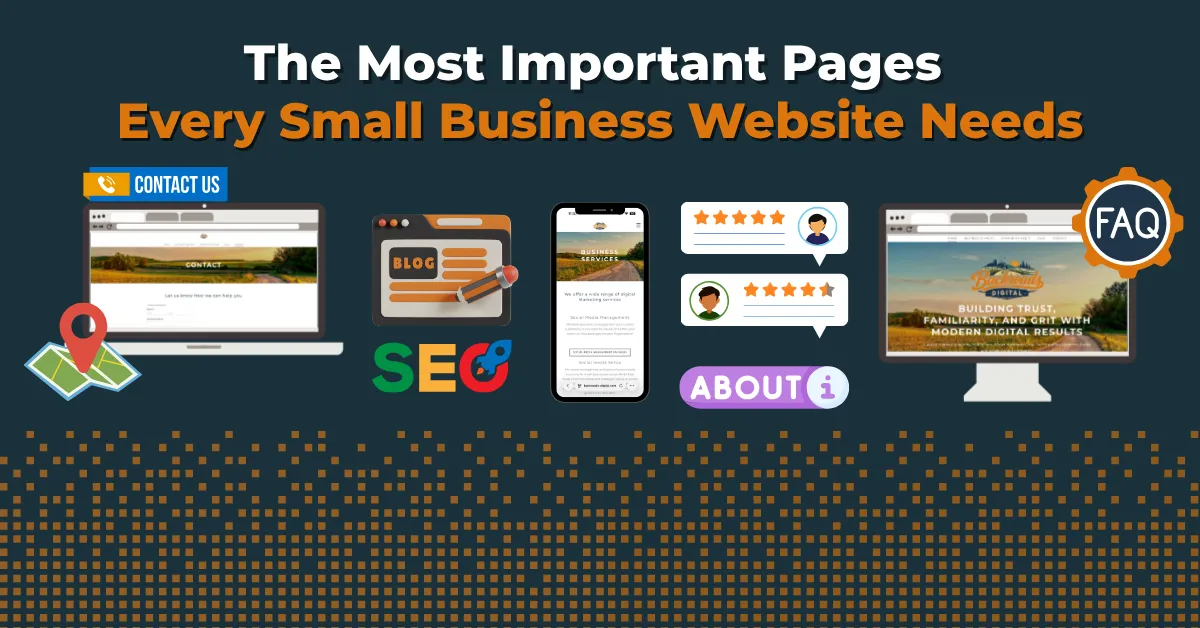
The Most Important Pages Every Small Business Website Needs

3/27/2026

 
Picture
​If you’re a small business owner, having a website is a great first step.

But not all websites are created equal.

​Some websites look nice but don’t actually help bring in customers. Others are simple—but structured in a way that builds trust, answers questions, and leads people to take action.

One of the biggest differences?
Having the right pages.

Let’s walk through the most important pages every small business website needs—and why each one matters.

1. Homepage (Your First Impression)
Your homepage is often the first place people land when they visit your website.
Within just a few seconds, visitors should understand:
  • What you do
  • Who you serve
  • Where you’re located (especially for local businesses)
  • What they should do next
A strong homepage should include:
  • A clear headline
  • A brief explanation of your services
  • Trust signals (reviews, testimonials, or experience)
  • A visible call to action (Call, Book, Request a Quote)
For small business website optimization, your homepage isn’t just about looking good—it’s about guiding visitors quickly.

2. Services Page (What You Actually Offer)
Your services page is one of the most important pages for converting visitors into customers.
This is where people go to answer:
👉 “Can this business help me?”
A strong services page should:
  • Clearly list your services
  • Explain what each service includes
  • Highlight benefits (not just features)
  • Include pricing (if applicable) or next steps
  • Use keywords relevant to your services
For example, instead of just saying “SEO Services,” you might say:
“Local SEO Services for Small Businesses in North Texas”
That helps both customers and search engines understand what you offer.

3. About Page (Build Trust)
Many small business owners underestimate the importance of the About page.
But it’s one of the most visited pages on a website.
Why?
Because people want to know who they’re doing business with.
Your About page should:
  • Tell your story (briefly and clearly)
  • Explain why you started your business
  • Highlight your experience or background
  • Show your connection to the local community
For small-town businesses especially, trust is everything.
A strong About page helps turn interest into confidence.

4. Contact Page (Make It Easy to Reach You)
If someone wants to contact you, it should be as easy as possible.
Your contact page should include:
  • Phone number (click-to-call on mobile)
  • Email address
  • Contact form
  • Business hours
  • Location or service area
Bonus points if you include:
  • A Google Map
  • Quick response expectations (“We respond within 24 hours”)
A confusing or hard-to-find contact page can cost you customers.

5. Reviews / Testimonials Page (Social Proof)
People trust other people.
Before choosing a business, many customers look for:
  • Reviews
  • Testimonials
  • Proof of results
Having a dedicated page (or strong section) for this builds credibility.
This is especially important for:
  • Service-based businesses
  • Local businesses
  • Higher-ticket services
Even a few strong testimonials can make a big difference in website conversion rates.

6. Blog or Resources Page (SEO & Authority)
A blog may not seem essential at first—but it plays a big role in small business SEO.
Blog content helps you:
  • Rank in Google search results
  • Answer common customer questions
  • Show expertise
  • Bring in new visitors over time
For example, blogs like:
  • “What Is Digital Marketing?”
  • “Why Website Speed Matters”
  • “Signs Your Website Is Costing You Customers”
…help potential customers find you before they even know your business name.
Over time, this builds long-term traffic and visibility.

7. FAQ Page (Remove Objections)
An FAQ (Frequently Asked Questions) page helps address concerns before someone reaches out.
This can include:
  • Pricing questions
  • Timeline expectations
  • What to expect when working with you
  • Common concerns customers have
This reduces hesitation and helps people feel more confident moving forward.

8. Location / Service Area Page (For Local SEO)
If you serve specific cities or counties, this is important.
A location page helps you rank for searches like:
  • “digital marketing in Bonham TX”
  • “website design near me”
  • “SEO services in North Texas”
You can include:
  • Cities you serve
  • Local references
  • Directions or service area details
This improves your local search visibility and helps nearby customers find you.

Why These Pages Matter Together
Each page plays a different role:
  • Homepage → First impression
  • Services → Explains what you offer
  • About → Builds trust
  • Contact → Drives action
  • Reviews → Builds credibility
  • Blog → Drives traffic
  • FAQ → Removes hesitation
  • Location → Improves local SEO
When all of these work together, your website becomes more than just an online brochure.
It becomes a tool that helps turn visitors into customers.

Final Thoughts
A well-structured website doesn’t happen by accident.
It’s built with intention.
If your website is missing key pages—or if those pages aren’t clearly guiding visitors—you may be losing opportunities without realizing it.
The good news?
These are fixable problems.
And even small improvements can make a big difference in how your website performs.

Want to Improve Your Website?
If you’re not sure whether your website has the right pages—or if it’s structured in a way that actually converts visitors into customers—we’re here to help.
👉 Explore our Website & SEO Packages to see how we can help you build a website that works.
 
Website/SEO Packages
<<Previous

    Trevor Williams

    Owner - Backroads Digital

    Archives

    May 2026
    April 2026
    March 2026
    February 2026
    January 2026

    Categories

    All
    Google
    SEO

    RSS Feed

Services

About us

Social Media Management
Website/SEO
Email Marketing
Text Messaging Marketing

Community Media

Privacy POlicy

Contact

903-300-6209
​[email protected]
© COPYRIGHT 2026. Backroads Digital LLC.
✞​ Whatever you do, work heartily, as for the Lord and not for men, knowing that from the Lord you will receive the inheritance as your reward. ✞​ Colossians 3:23-24 ESV
  • Home
  • About
  • Business Services
    • Social Media Management
    • Social Media Setup
    • Website/SEO
    • Email Marketing
    • Text Message Marketing
    • Frequently Asked Questions (FAQ)
  • Media Digitizing
  • Blog
  • Contact